

Dehradun: Dehradun Zoo has welcomed a rare blue-eyed white tiger named Tejas, who travelled more than 500 kilometres by road from Gwalior as part of an animal-exchange programme. The 2.4-year-old male has already begun exploring his new enclosure and is being closely monitored by the zoo’s veterinary team.
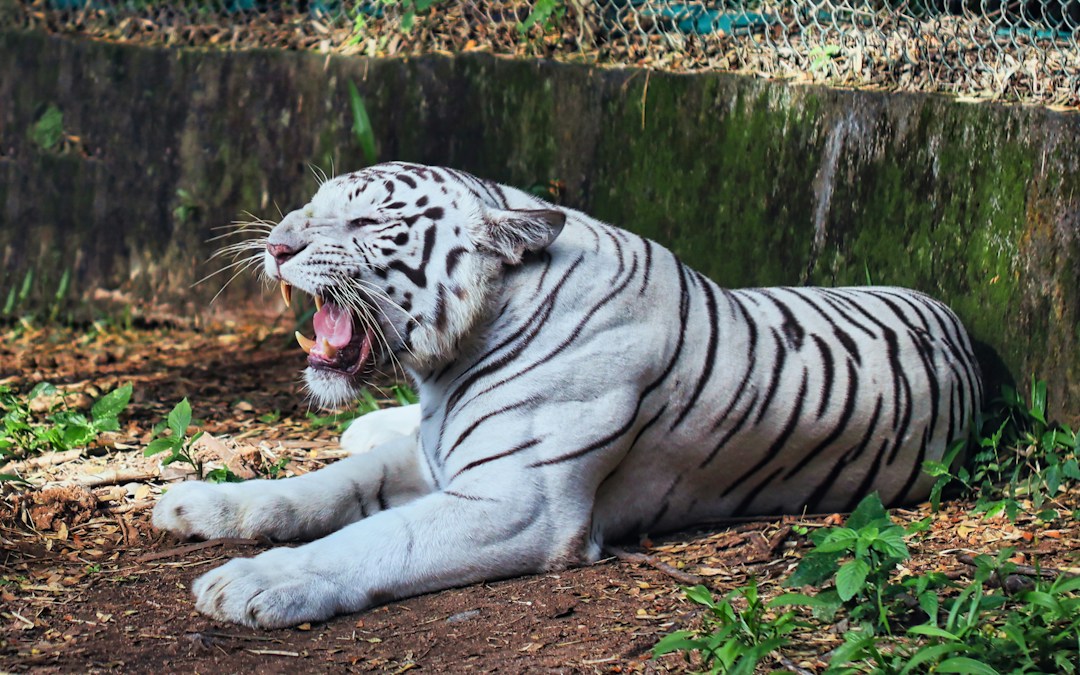
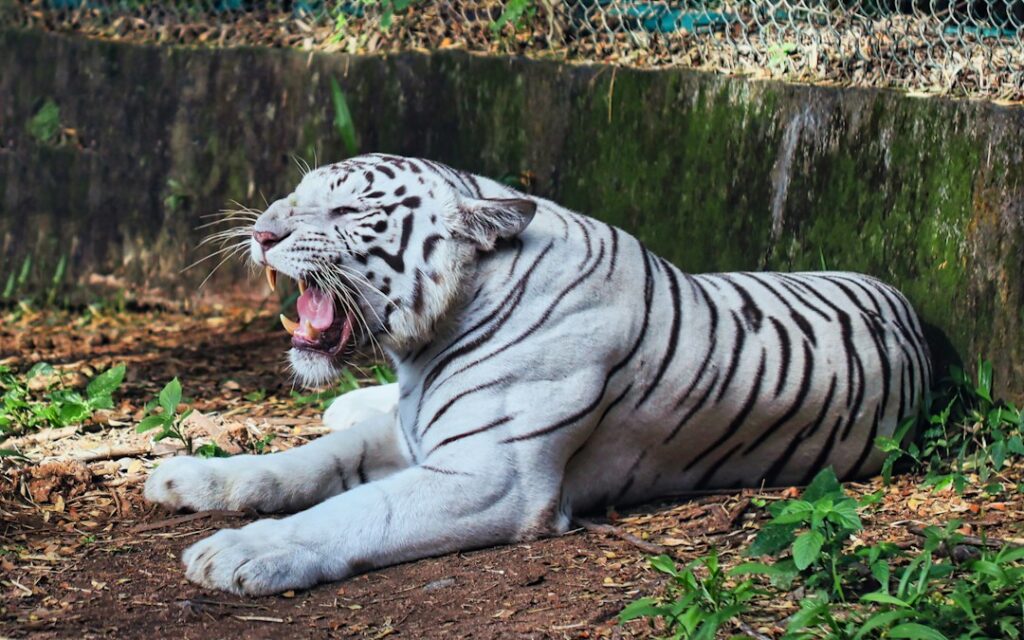
Representative image of a white tiger. This is not a photograph of Tejas. Photo: Bhaumik Shrivastava / Unsplash.
Tejas travels from Gwalior to Dehradun
Tejas was transferred from Gandhi Zoological Park in Gwalior to Dehradun Zoo under a reciprocal tiger-exchange programme. Reports put the road journey at roughly 514 to 556 kilometres, with the transfer taking around 12 to 14 hours depending on the account. A specialised veterinary and forest department team accompanied the tiger during the journey.
The transfer was carried out between September 25 and 28 under the regulatory framework of the Central Zoo Authority’s ex-situ conservation programme, according to Times of India. In the reciprocal exchange, a tiger from Dehradun was transferred to Gwalior.
A blue-eyed white tiger with dark stripes
Tejas has a white coat, dark stripes and blue eyes. Zoo officials quoted by Times of India explained that the colouring is associated with leucism, a congenital genetic condition involving reduced pigmentation. This is different from albinism, in which pigmentation is absent and the eyes are typically unpigmented.
A white tiger is not a separate species or breed. It is a tiger with an inherited colour variation. The dark stripes remain visible, which also distinguishes the appearance from an entirely unpigmented animal.
Tejas immediately began exploring
According to Dehradun Zoo’s senior veterinarian Pradeep Mishra, Tejas was active after reaching his new enclosure. He was observed moving along the enclosure fence, sniffing the air and examining his surroundings. Zoo officials said his behaviour and response to food suggested that he was beginning to adapt to the new environment.
On his first day, Tejas reportedly consumed his full 5-kg meat ration. The zoo increased the allocation to 7 kg on the second day while monitoring his gastrointestinal response and overall adaptation.
Why visitors cannot see him yet
Tejas will not immediately be placed on public display. Zoo officials said he will undergo about 20 days of quarantine and observation following the inter-zoo transfer. During this period, access will be restricted mainly to his enclosure keeper and veterinarian while his health, diet and behaviour are monitored.
Reports indicate that visitors may have to wait roughly a month before the tiger is available for public viewing, depending on the completion of the quarantine and the zoo’s assessment of his adjustment.
Part of a wider conservation exchange
The move is part of an exchange between zoological facilities rather than a transfer of a wild tiger from its natural habitat. The programme is intended to support managed wildlife conservation and improve the diversity of animals held by participating zoos.
Gwalior’s Gandhi Zoological Park is a long-established zoo that houses a range of protected and rare species, including white tigers. The Gwalior district administration describes the zoo as part of the Phool Bagh complex and notes its history dating back to 1922.
What makes Tejas unusual?
Tejas’s combination of a white coat, dark stripes and blue eyes makes him visually distinctive, but the key point is that his appearance represents a colour variation within the tiger species. His arrival in Dehradun is therefore notable for the zoo and wildlife visitors, while his immediate health and behavioural adjustment remain the priority during quarantine.
Sources
- The Times of India: Uttarakhand gets its first white Royal Bengal tiger from Gwalior
- The Times of India: Meet Tejas, the blue-eyed white tiger
- NDTV: Tejas reaches Dehradun Zoo after 556-km journey
- The New Indian Express: White tiger Tejas travels 550 km to Dehradun
- Gwalior District Administration: Gandhi Zoological Park
Last updated: October 2, 2026.