
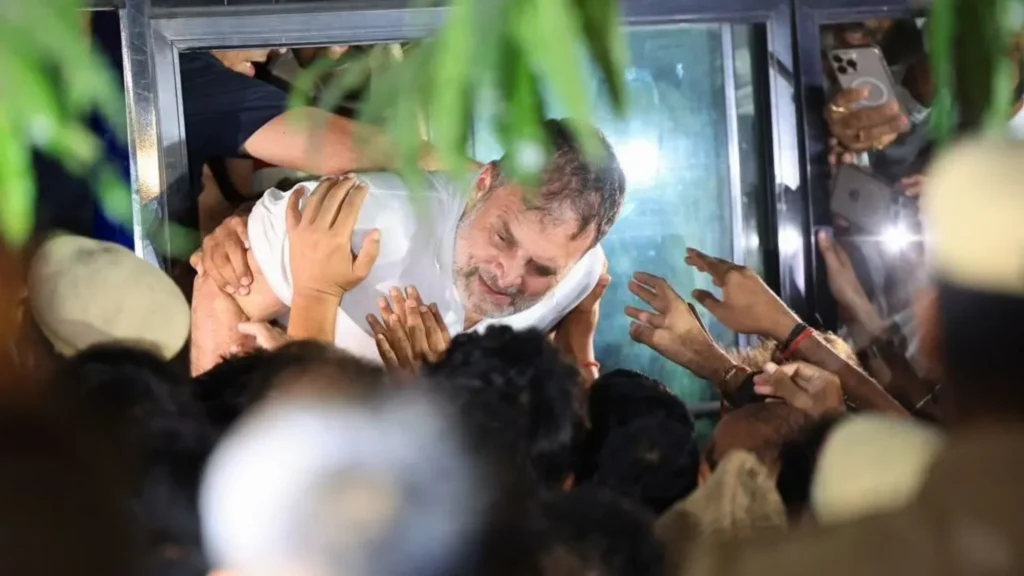

Rahul Gandhi was detained by Delhi Police during an opposition protest on Tuesday as a dispute over India’s voter rolls escalated into a direct confrontation between opposition parties, the Election Commission and the government. The demonstration was not simply about the dramatic scenes outside the poll panel. At its centre is a much larger argument over how India is revising its electoral rolls, how excluded voters can be restored, and whether the Election Commission has handled the process with enough transparency.
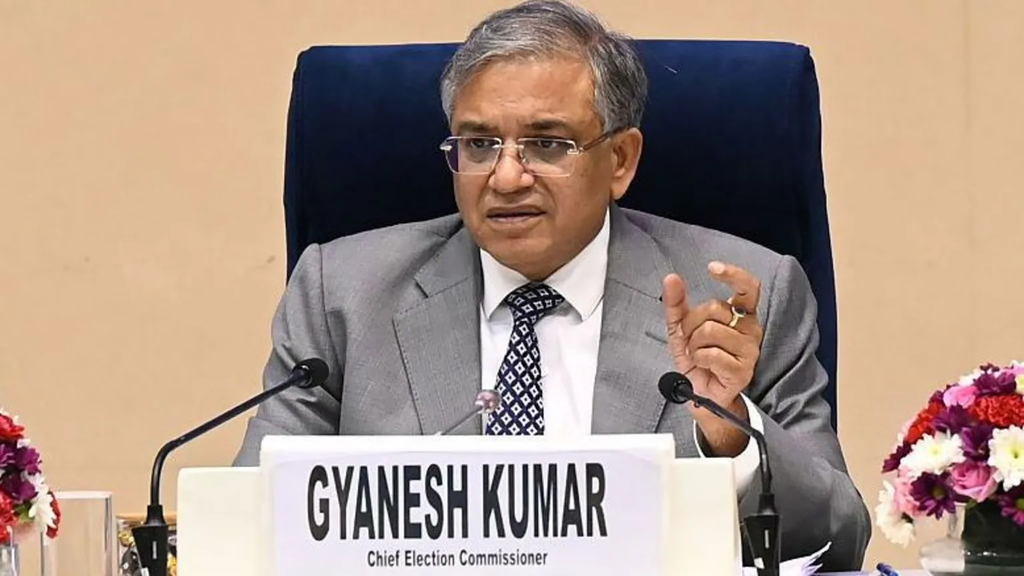
The protest followed repeated opposition demands for the resignation of Chief Election Commissioner Gyanesh Kumar. Opposition parties allege that the ongoing Special Intensive Revision (SIR) of electoral rolls has excluded legitimate voters and that decisions by the Election Commission have favoured the ruling BJP. The Election Commission and BJP reject those allegations and say the revision is intended to remove duplicate, ineligible and otherwise invalid entries while protecting eligible voters.
How a march toward the Election Commission turned into a standoff
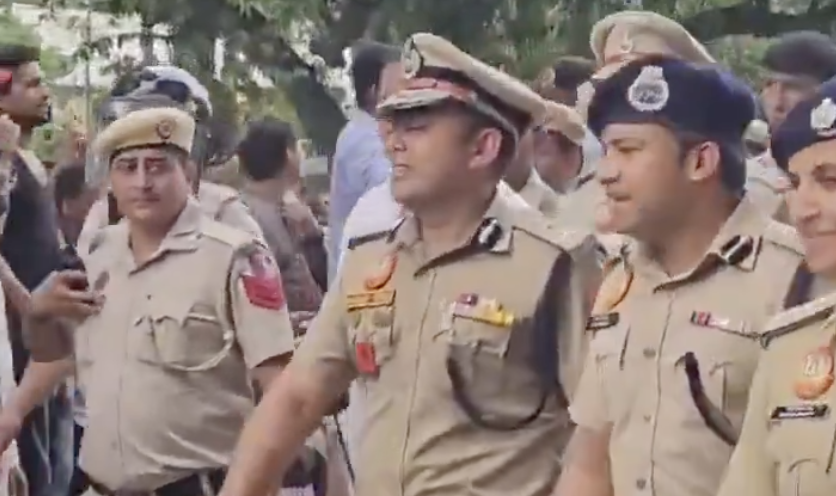
Opposition MPs led by Gandhi attempted to march from the Parliament area toward the Election Commission headquarters in New Delhi. Police erected barricades and detained several lawmakers as the march was stopped.
Gandhi and Congress leader Priyanka Gandhi Vadra later joined other opposition politicians in a sit-in near Akashvani Bhavan. Police eventually removed the protesters. Video footage showed Rahul Gandhi being forced into a police bus and attempting to climb back out through a window, turning what had been a political protest into a widely circulated confrontation.
According to reporting by Reuters, the protests were part of a broader opposition campaign demanding Kumar’s resignation. The opposition says the Election Commission should answer questions about recent voter-list revisions and its internal decision-making.
Rahul Gandhi during a public event in New Delhi. Photo: Prime Minister’s Office, Government of India, via Wikimedia Commons, GODL-India.
Voter records have become the centre of a growing political dispute over electoral-roll revisions.
The voter-roll dispute is much bigger than Tuesday’s arrests
The political confrontation has its roots in the nationwide SIR exercise. The Election Commission says the process is designed to ensure that electoral rolls are accurate and free from duplicate or ineligible entries. The government has also pointed to safeguards intended to ensure that eligible voters are not left out.
The scale of the exercise, however, has become one of the central sources of controversy. More than 130 million names have been left out of draft rolls during the nationwide process, according to recent reporting by India Today. A draft-roll deletion does not necessarily mean a person has permanently lost voting rights, because voters can challenge exclusions through the procedures provided by the Election Commission.
The commission has also ordered a special drive in states where SIR has been completed to identify and enrol voters who may have been left out. The Indian Express reported that Form 6 is being used as a route for people to seek re-entry into the rolls without going through the same SIR questionnaire.
Why the Election Commission itself is under scrutiny
The dispute has intensified because questions have also been raised about disagreements inside the three-member Election Commission.
An investigation by The Indian Express reported that Election Commissioners Sukhbir Singh Sandhu and Vivek Joshi had objected on multiple occasions to decisions and orders they said had been issued in the commission’s name without their knowledge. The reported disagreements included matters related to additions and deletions from electoral rolls, access to voter data and the security of electoral information.
The commission has rejected the suggestion that these disagreements demonstrate institutional breakdown. Its position is that differences of view are part of the functioning of a multi-member constitutional body and that decisions were ultimately taken unanimously.
That distinction matters. Allegations about individual decisions, internal disagreement and the integrity of the electoral process are separate questions, and none should automatically be treated as proof that an election has been manipulated. What the controversy does demonstrate is that the public demand for clearer explanations from the institution has become harder to ignore.
The legal backdrop makes the fight even more consequential
The Election Commission derives its constitutional authority from Article 324, while the preparation and revision of electoral rolls are governed by election laws and rules. The Election Commission’s own 2025 order on SIR cites Article 324, the Representation of the People Act, 1950 and the Registration of Electors Rules, 1960 as the legal framework for electoral-roll revision.
There is also a separate legal debate over the protections given to election commissioners under the 2023 law governing the appointment, service conditions and term of office of the Chief Election Commissioner and other Election Commissioners. RumorRush recently examined the Supreme Court’s questions around legal protection for election commissioners as part of this wider institutional debate.
Our earlier report on the Supreme Court and election commissioners provides additional context on why questions about the commission’s independence have become politically significant.
Both sides are framing the same voter-list exercise very differently
For the opposition, the central concern is the possibility that legitimate voters could be excluded at scale and that the safeguards for restoring their names may not be sufficient in practice. Their political campaign has therefore linked the SIR process directly to the credibility of future elections.
The Election Commission’s argument is fundamentally different. It says electoral rolls have to be cleaned of duplicate, deceased, shifted and otherwise ineligible entries, and that the revision is being carried out through a structured process with opportunities for eligible citizens to establish their claims.
The difference between those positions is important because the existence of large-scale deletions by itself does not establish deliberate voter suppression. At the same time, the size of the exercise means that even administrative errors can have significant democratic consequences if genuine voters are wrongly excluded and cannot navigate the correction process in time.
What happens after the street protests
The immediate political confrontation is likely to continue. Opposition parties are demanding Kumar’s resignation, an end to the current SIR process and changes to the way electoral rolls are prepared. Youth-led groups have also joined the protests, broadening the issue beyond established political parties.
The Election Commission has said it is willing to meet opposition representatives, while objecting to the proposed format and size of the delegation. The dispute is therefore moving on two tracks at once: political pressure in the streets and institutional scrutiny through courts, Parliament and the electoral administration.
For voters, the most important part of the story is less dramatic than the images of politicians being put on buses. Anyone concerned that their name has disappeared from a draft electoral roll needs to use the official verification, correction and appeal mechanisms rather than relying only on political claims circulating online. The Election Commission’s voter services portal provides tools for checking electoral-roll information and submitting relevant forms.
The confrontation involving Rahul Gandhi may dominate the news cycle, but the more consequential question is whether India can complete the largest voter-roll revision in years while maintaining public confidence that eligible citizens will remain able to vote. That confidence depends not only on the final rolls, but also on whether the process used to create them is transparent, reviewable and trusted across the political spectrum.
Sources and further reading:
- BBC News: India’s opposition leader dragged onto bus as police break up protest
- Reuters: Rahul Gandhi and lawmakers detained over election chief protest
- Election Commission of India: Special Intensive Revision order
- Press Information Bureau: ECI safeguards during SIR
- The Indian Express: Special drive for voters left out of SIR

