
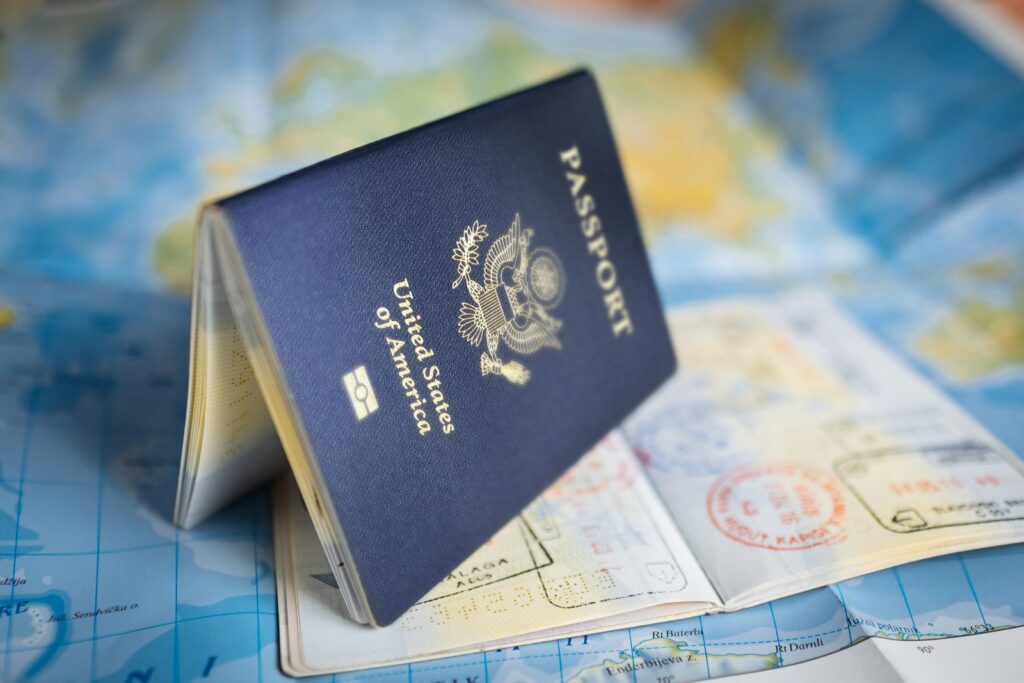

The Trump administration has suspended the processing of permanent labor certification applications tied to Microsoft and several other major technology companies, sharply raising the stakes for foreign workers seeking U.S. permanent residency.
Vice President JD Vance announced the action on October 8, accusing Microsoft of abusing the H-1B system. Labor Secretary Keith Sonderling said the suspension also covers Adobe, Cognizant, Infosys, Tata Consultancy Services, Wipro, HCL Technologies and Capgemini. Reuters reported that the administration says the action is aimed at suspected fraud and protecting U.S. jobs. The companies named by Reuters had not immediately responded to requests for comment, while TCS declined to comment. citeturn0news6turn0search0
This is a PERM freeze, not an end to the H-1B visa
The distinction is important. The administration has not announced that existing H-1B visas for employees of these companies are being cancelled.
The action targets the Permanent Labor Certification, or PERM, process administered by the U.S. Department of Labor. PERM allows an employer to seek certification that a permanent job can be filled by a foreign worker after the employer meets requirements designed to protect U.S. workers. The Labor Department describes permanent labor certification as the mechanism through which an employer can hire a foreign worker to work permanently in the United States. citeturn1search1turn1search6
For many employment-based green-card cases, PERM is an important step before the employer proceeds with the immigration petition and ultimately the permanent-residency process. That means a freeze can leave workers legally employed in the United States while making their longer-term path to permanent residency considerably more uncertain.
Why Microsoft is at the centre of the announcement
Vance singled out Microsoft during the announcement, arguing that the company had laid off U.S. workers while continuing to use foreign-worker programmes. Reuters reported that Vance accused Microsoft of replacing laid-off American workers with foreign workers and said the administration would not accept new or process pending PERM applications involving the targeted companies. citeturn0news6turn0search0
Those are administration allegations, not findings established by a court in the material currently available. Microsoft had not immediately responded to Reuters’ request for comment when the report was published. citeturn0search0
The Labor Department’s action therefore matters independently of the political rhetoric around it. If PERM processing remains suspended, companies cannot use the normal certification pathway for affected applications while the suspension is in effect.

Indian IT companies are heavily exposed
The inclusion of Infosys, TCS, Wipro, HCL Technologies and Cognizant makes the decision particularly significant for Indian technology professionals.
Reuters noted that Indian IT companies have historically been among the biggest users of H-1B visas. The freeze does not appear to directly affect current H-1B holders, but it can disrupt a common route through which employers sponsor those workers for permanent residency. citeturn0search0turn0news6
For an Indian technology worker, that distinction can be crucial. A person may continue working under H-1B status while the employer’s green-card process is delayed or stopped. Since employment-based immigration can involve lengthy queues and multiple stages, interruptions at the PERM stage can have consequences well beyond the date on which the suspension is announced.
What the government says it is trying to prevent
The administration is framing the action as an enforcement measure against fraud and practices that it says disadvantage American workers.
The Labor Department already has authority to investigate and suspend PERM processing in cases involving suspected fraud or willful misrepresentation. Earlier this year, the department used that authority against Cloudera, suspending its PERM applications for 180 days following allegations involving recruitment practices. citeturn1search3
The Labor Department’s Office of Inspector General also launched a broader investigation in July into alleged H-1B and PERM fraud, including claims involving fraudulent applications, wage kickbacks and worker exploitation. Those investigations provide context for the administration’s current enforcement push, although they do not by themselves establish wrongdoing by every company now facing a suspension. citeturn1search4
The move fits a wider H-1B crackdown
The PERM action comes after the administration had already increased scrutiny of the H-1B system. A September White House order directed federal agencies to coordinate more closely on H-1B compliance and specifically instructed officials to consider employer layoffs when evaluating H-1B-related applications and petitions. citeturn1search5
That order reflects the administration’s broader argument that H-1B should supplement the U.S. workforce rather than be used by employers to replace American workers with cheaper foreign labor. The administration has described widespread abuse as a reason for increased enforcement. citeturn1search5
The current PERM suspension adds another layer. H-1B governs temporary employment, while PERM sits on the permanent-residency pathway. Targeting both systems increases pressure on companies that rely heavily on international technology talent.
What happens to workers already in the United States?
For current H-1B employees at the affected companies, the immediate impact is different from a visa cancellation.
Reuters reported that the freeze does not appear to directly affect current H-1B holders. The larger concern is what happens to workers whose employers were preparing or processing PERM applications as part of a future green-card strategy. citeturn0search0
Workers already well into an employment-based immigration process may also need to determine exactly which stage their case has reached and whether the employer’s application is covered by the suspension. The precise effect can depend on the status of an individual case, so a company-wide announcement should not be interpreted as automatically producing the same legal outcome for every employee.
Why this could matter beyond Microsoft
Microsoft is the most visible name in the announcement, but the inclusion of major IT services companies gives the decision a much wider reach.
Technology outsourcing and consulting companies have large populations of foreign skilled workers, particularly in software engineering and IT services. A sustained PERM freeze could therefore affect recruitment, retention and long-term immigration planning across an industry that depends heavily on international talent.
It could also change how companies think about workforce location. If permanent-residency sponsorship becomes less predictable, employers may reassess where particular roles are based and how they structure long-term employment for workers who cannot rely on a straightforward transition from temporary status to permanent residency.
The immediate question is how long the suspensions last
The administration has announced the suspension and investigations, but the longer-term impact will depend on the findings and on how the Labor Department applies its enforcement powers to each company.
The department continues to publish PERM processing data and describes the programme as a pathway for employers to obtain permanent labor certification for foreign workers. Its processing system therefore remains in operation generally, even as specific employers face enforcement actions. citeturn1search2turn1search6
For workers and employers, the next important developments will be the scope and duration of each suspension, any responses from the affected companies, and whether investigations result in formal findings or further enforcement.
A major shift in the risk calculation for global tech talent
The significance of the announcement goes beyond one company or one visa category. For years, skilled technology workers could view the U.S. immigration system as a progression: temporary work authorization, employer sponsorship and eventually permanent residency. The latest actions make that progression less predictable for workers employed by companies under investigation.
For Indian technology professionals in particular, the suspension of PERM processing at several major employers creates a new uncertainty even where the underlying H-1B employment continues. The immediate story is therefore not that thousands of workers have suddenly lost their visas. It is that a major route from temporary skilled employment to permanent U.S. residency has been placed under significantly greater regulatory pressure.

