
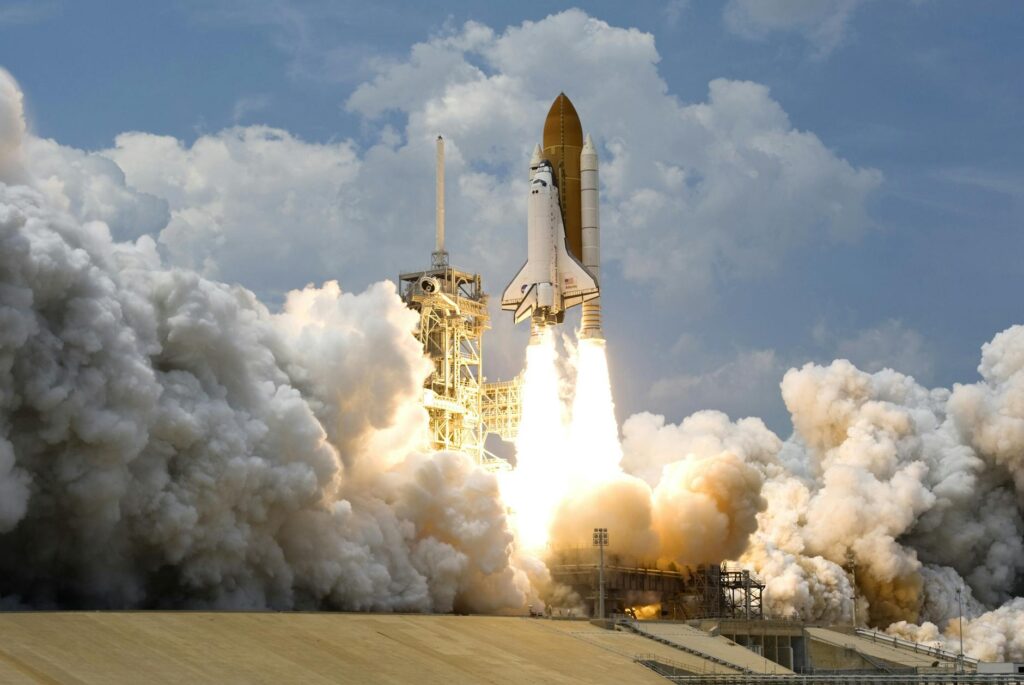

India’s space agency is charting an unprecedented launch calendar that stretches to March 2026, with seven missions slated to lift off from the Satish Dhawan Space Centre. The lineup blends high‑profile scientific payloads, commercial satellite deployments and the critical uncrewed test flight of the Gaganyaan crew‑module, a cornerstone of the nation’s human‑spaceflight ambition. By accelerating development cycles and leveraging new launch‑pad capabilities, ISRO aims to cement its position as a reliable, cost‑effective launch provider while showcasing home‑grown technology on the global stage. This article unpacks each mission, the technology behind them, and the broader strategic implications for India’s space future.
Expanded launch manifest
ISRO’s schedule comprises a mix of orbital and sub‑orbital missions, each selected to address scientific, commercial and strategic goals. The table below captures the core details announced by the agency.
| Mission | Launch vehicle | Primary payload | Scheduled date |
|---|---|---|---|
| Aditya‑L1 | PSLV‑C56 | Solar‑observatory satellite | 15 Oct 2024 |
| EOS‑04 | PSLV‑C57 | Earth‑observation constellation | 23 Mar 2025 |
| Uncrewed Gaganyaan (Gaganyaan‑2) | GSLV‑MkIII | Crew‑module test flight | April 2025 |
| IRNSS‑1I (Navigation satellite) | PSLV‑C58 | Regional navigation | 12 Aug 2025 |
| Cartosat‑3 series | GSLV‑MkIII | High‑resolution imaging | Feb 2026 |
| Commercial rideshare (multiple smallsats) | PSLV‑C59 | International payloads | June 2025 |
| Technology demonstrator for reusable launch | RLV‑X | Reusable vehicle prototype | Mar 2026 |
Uncrewed Gaganyaan – the rehearsal for human spaceflight
The uncrewed Gaganyaan mission, often referred to as Gaganyaan‑2, will be the first full‑scale flight of the crew‑module that will later carry Indian astronauts. The flight will test critical systems such as life‑support, thermal control, navigation and abort capabilities. Key milestones include a 4‑day orbital stint, autonomous docking with a service module, and a controlled re‑entry followed by a splash‑down recovery off the coast of Sri Lanka.
Success will unlock the next phase – a crewed flight slated for 2027 – and signal India’s entry into the exclusive club of nations capable of independent human spaceflight. The mission also serves as a platform for private‑sector participation, with several Indian startups contracted for telemetry, ground‑station support and data analytics.
Scientific and commercial payloads driving the agenda
Beyond Gaganyaan, the 2024‑26 window is packed with missions that advance both science and commerce. Aditya‑L1 will place a suite of instruments at the Lagrange‑1 point to study solar dynamics, providing real‑time data crucial for space‑weather forecasting. EOS‑04 expands India’s Earth‑observation capability, delivering higher‑resolution imagery for agriculture, disaster management and urban planning.
On the commercial front, the rideshare launch on PSLV‑C59 is expected to carry over 30 small satellites from 12 different countries, reinforcing ISRO’s reputation as a cost‑effective launch partner. The navigation satellite IRNSS‑1I will complete the regional navigation constellation, improving positioning accuracy for civilian and defense applications.
Infrastructure upgrades and international collaborations
To accommodate the crowded launch calendar, ISRO has upgraded the Second Launch Pad (SLP‑2) at Sriharikota, enabling simultaneous processing of GSLV‑MkIII and PSLV missions. The agency is also deepening ties with NASA and ESA for data sharing on solar and atmospheric studies, while collaborating with private firms under the Indian Space Industry Programme to develop reusable launch technology.
Challenges, risk mitigation and the road ahead
Maintaining such an aggressive timeline demands meticulous risk management. Budgetary constraints, supply‑chain bottlenecks for critical components, and the need for rigorous testing of the crew‑module’s abort system are the primary hurdles. ISRO’s strategy hinges on parallel development streams, leveraging commercial partners for satellite integration, and adopting a “flight‑as‑you‑go” philosophy that incorporates lessons from each launch into the next.
Despite these challenges, the agency’s track record of on‑time, on‑budget deliveries gives confidence that the 2024‑26 roadmap will largely stay on course, positioning India as a major player in both scientific exploration and commercial launch services.
Conclusion
ISRO’s seven‑mission slate, culminating in the uncrewed Gaganyaan test flight, represents a decisive stride toward a self‑reliant, globally competitive space program. By intertwining scientific research, navigation upgrades, commercial rideshares and pioneering reusable‑launch work, the agency is building a diversified portfolio that mitigates risk while maximizing impact. If the schedule holds, India will not only demonstrate its capability to launch complex crewed hardware but also solidify its role as a preferred launch hub for international customers, setting the stage for a vibrant space economy in the years to come.
Image by: Pixabay
https://www.pexels.com/@pixabay