
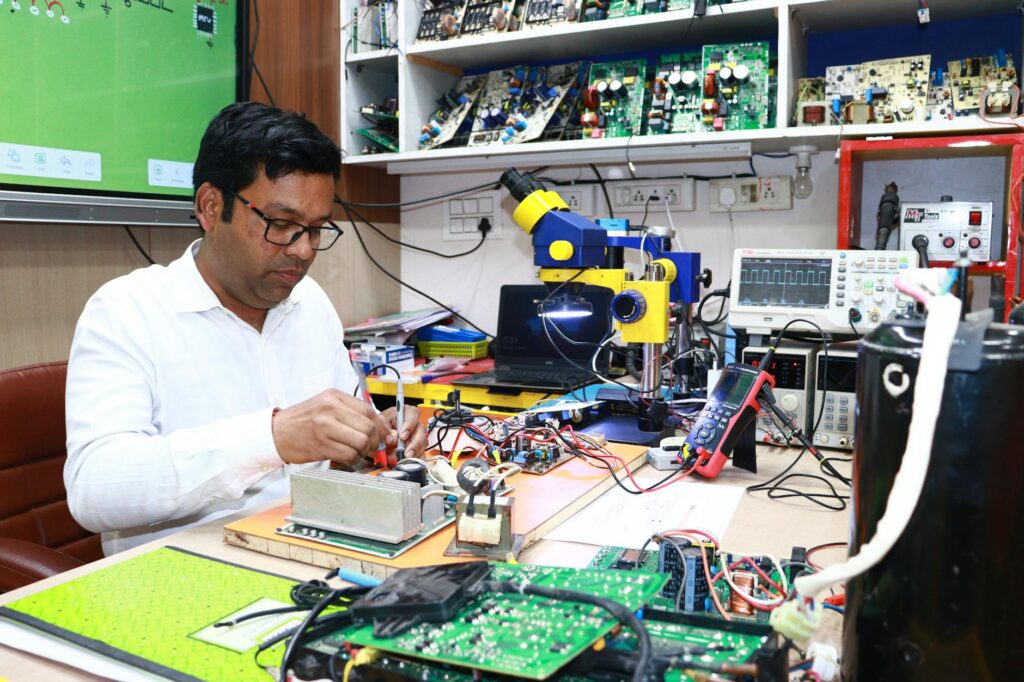

India is poised to transform its space programme by establishing a network of dedicated space laboratories, dubbed Antariksh Prayogshala, that will enable hands‑on development of in‑space manufacturing, robotics and habitability technologies. The initiative, announced by the Department of Space in December 2025, aims to bridge the gap between ground‑based research and real‑world application aboard satellites and future lunar or Martian habitats. By integrating practical training with cutting‑edge research, the labs are expected to accelerate home‑grown innovation, reduce reliance on foreign vendors, and create a pipeline of skilled engineers for the burgeoning Indian space sector. The move also signals a strategic shift toward long‑term, sustainable presence beyond Earth’s atmosphere.
Vision for in‑space research
The core ambition of the Antariksh Prayogshala project is to cultivate a self‑sufficient ecosystem where concepts can be prototyped, tested, and refined in micro‑gravity conditions before being launched. In‑space manufacturing – ranging from 3‑D‑printed components to regenerative life‑support systems – is seen as a cornerstone for future deep‑space missions. By creating a domestic test‑bed, India hopes to lower mission costs, shorten development cycles, and position itself as a reliable partner for multinational space‑exploration endeavors.
Blueprint of the Antariksh Prayogshala
Three flagship labs are slated for completion between 2026 and 2029:
| Location | Focus area | Expected launch year |
|---|---|---|
| Hyderabad, Telangana | Micro‑gravity materials science & 3‑D printing | 2026 |
| Bengaluru, Karnataka | Robotics, AI for autonomous operations | 2027 |
| Thiruvananthapuram, Kerala | Life‑support and habitat simulation | 2029 |
Each centre will house a suite of on‑orbit test platforms, including CubeSat‑scale free‑flyers and a small reusable launch vehicle prototype. The labs will be directly linked to ISRO’s existing facilities, allowing seamless transfer of data and hardware.
Strategic partnerships and funding
Funding for the venture is projected at ₹12,000 crore over the next five years, sourced from the central budget, private‑sector contributions, and international collaborations. Notable partners include the Indian Institute of Space Science and Technology (IIST), private aerospace firms such as Skyroot Aerospace, and foreign agencies like the European Space Agency (ESA). These alliances are expected to bring expertise in additive manufacturing, AI‑driven autonomy, and sustainable life‑support, while also opening avenues for joint missions.
Impact on industry and education
Beyond technological breakthroughs, the labs are designed as living classrooms. Students and early‑career engineers will rotate through short‑term residencies, gaining exposure to real‑time problem solving in a micro‑gravity environment. The initiative is projected to create over 5,000 skilled jobs by 2030 and to spawn a new generation of Indian space‑tech startups focused on in‑space services.
Challenges and timeline
Implementing a full‑scale in‑space research infrastructure poses several hurdles: securing reliable launch windows, ensuring safety protocols for on‑orbit experiments, and navigating regulatory approvals for commercial use of space. The roadmap includes a phased rollout – initial ground‑based simulators in 2025, followed by sub‑orbital test flights in 2026, and full‑scale orbital platforms by 2028. Continuous risk assessments and adaptive governance will be essential to keep the project on schedule.
Conclusion
India’s Antariksh Prayogshala represents a bold step toward turning space from a frontier of exploration into a laboratory for practical innovation. By coupling state‑of‑the‑art facilities with strategic partnerships and a clear talent pipeline, the programme aims to accelerate indigenous technology development, boost the nation’s economic stake in the space economy, and lay the groundwork for sustainable human presence beyond Earth. If the outlined milestones are met, India could emerge as a leading hub for in‑space manufacturing and research within the next decade.
Image by: Multitech Institute
https://www.pexels.com/@multitech-institute-2155033298