
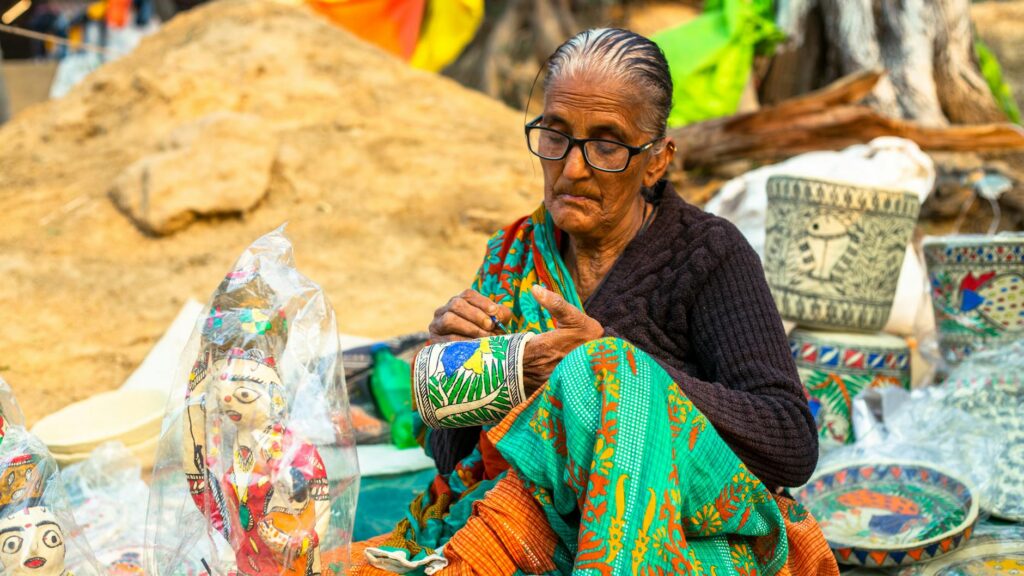

Yuvan Aggarwal, a young changemaker from Gurugram, has turned a simple idea into a thriving ecosystem that supports more than 4,000 artisans across northern India. Through his platform Hunarsetu, he offers a digital marketplace, skill‑upgrading programs, and micro‑credit solutions that together create a stable income for craftsmen who once struggled to find buyers beyond their local markets. This article explores the origins of Hunarsetu, the technology that powers it, the financial mechanisms that sustain artisans, and the measurable impact the initiative has achieved since its launch.
The spark that ignited Hunarsetu
Growing up in a family that relied on traditional handicrafts, Yuvan witnessed first‑hand the volatility faced by artisans when middlemen dictated prices. After completing his engineering degree, he spent a year traveling through villages in Haryana and Uttar Pradesh, documenting the challenges of handloom weavers, leather workers, and wood artisans. The turning point came when he realized that a single, well‑designed digital platform could eliminate the middleman, giving craftsmen direct access to urban consumers. In 2022, he launched Hunarsetu with a modest seed fund, positioning the venture as a bridge between heritage skills and modern e‑commerce.
Building a digital marketplace for craftsmen
Hunarsetu’s marketplace is built on a mobile‑first architecture that works on low‑bandwidth connections, a critical feature for rural artisans. The platform offers:
- Product listings with high‑resolution images and storytelling captions that highlight the cultural significance of each item.
- Secure payment gateway that ensures artisans receive payments within 48 hours of order confirmation.
- Logistics partnership with regional couriers to handle last‑mile delivery to metros like Delhi, Mumbai, and Bengaluru.
By integrating a simple inventory management tool, artisans can track stock levels without needing advanced technical skills. The platform also provides analytics dashboards, allowing craftsmen to see which products are trending and adjust their production accordingly.
Financial stability through micro‑credit and training
Beyond sales, Hunarsetu offers a micro‑credit scheme that partners with local banks to extend low‑interest loans of up to ₹1.5 lakhs per artisan. These funds are earmarked for raw material procurement, tool upgrades, and skill‑enhancement workshops. Over the past three years, more than 1,200 artisans have completed certified training modules in design innovation, quality control, and digital marketing, leading to a 35 % increase in average order value.
Impact metrics and future roadmap
Hunarsetu’s data‑driven approach makes impact measurement transparent. The table below summarizes key milestones as of 10 January 2026:
| Year | Artisans onboarded | Total sales (₹ crore) | Micro‑credit disbursed (₹ crore) |
|---|---|---|---|
| 2022 | 1,500 | 0.8 | 0.3 |
| 2023 | 2,500 | 1.9 | 0.7 |
| 2024 | 3,200 | 3.2 | 1.1 |
| 2025 | 3,800 | 4.5 | 1.5 |
| 2026 | 4,200 | 5.8 | 1.9 |
The platform now supports artisans across five major categories: handloom, leather, woodwork, metalcraft, and mixed crafts. By the end of 2026, Hunarsetu aims to cross the 5,000‑artisan mark and introduce an AI‑driven design recommendation engine to help creators anticipate market trends.
Conclusion
Yuvan Aggarwal’s Hunarsetu demonstrates how technology, when paired with deep cultural empathy, can transform fragmented cottage industries into sustainable, high‑value enterprises. By eliminating exploitative intermediaries, providing affordable credit, and upskilling craftsmen, the platform not only stabilizes incomes for over 4,000 artisans but also preserves India’s rich craft heritage for future generations. As Hunarsetu scales, its model offers a replicable blueprint for other regions seeking to empower informal workers through digital inclusion.
Image by: Swastik Arora
https://www.pexels.com/@swastikarora