
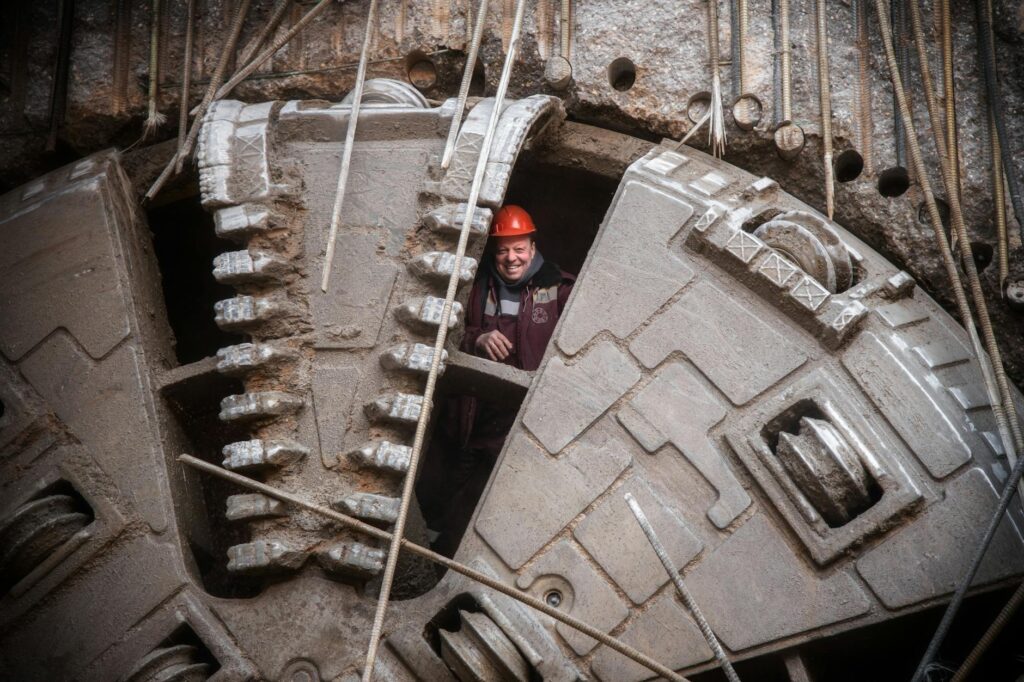

In a significant stride for regional connectivity, the Haryana Orbital Rail Corridor (HORC) tunnel linking Gurugram and Manesar has crossed the 50 % excavation milestone. The achievement underscores the rapid pace of one of the most ambitious rail projects in North India, aimed at easing traffic congestion, spurring economic growth, and integrating emerging industrial hubs. With more than 4 km of twin-bore tunnel already dug, the project is on track to meet its 2027 completion target, promising a high‑speed, freight‑friendly corridor that could reshape the logistics landscape of the National Capital Region.
Strategic importance of the HORC corridor
The HORC is designed as a circular rail loop that will connect key nodes such as Gurugram, Manesar, and the upcoming Delhi‑Mumbai Expressway. By providing a dedicated freight and passenger line, the corridor aims to:
- Divert heavy truck traffic from Delhi’s overburdened roads.
- Facilitate faster movement of goods between industrial parks.
- Boost real‑estate development along the alignment.
Experts estimate that the corridor could reduce travel time between Gurugram and Manesar from 45 minutes by road to under 15 minutes by rail, a factor that could attract multinational corporations to set up logistics hubs in the region.
Progress on the ground: excavation milestones
Construction began in early 2022, with the twin-bore tunnel employing a Tunnel Boring Machine (TBM) sourced from Germany. As of October 2025, the TBM has completed 2.1 km of the planned 4.2 km stretch, marking the 50 % excavation point. The following table summarizes the key milestones:
| Milestone | Date achieved | Details |
|---|---|---|
| Project kickoff | January 2022 | Groundbreaking ceremony and mobilization of equipment. |
| TBM launch | June 2023 | First bore commenced from the Gurugram portal. |
| 50 % excavation | October 2025 | 2.1 km of twin-bore tunnel completed. |
| Projected completion | 2027 | Full tunnel, track laying, and commissioning. |
Despite the progress, the project faces challenges such as groundwater management, land acquisition delays, and coordination with parallel infrastructure works like the Delhi‑Mumbai Expressway.
Economic ripple effects and stakeholder outlook
Local businesses are already feeling the anticipation. Real‑estate developers have reported a 12 % rise in land values within a 5‑km radius of the tunnel alignment. Moreover, the National Highways Authority of India (NHAI) expects the corridor to handle up to 30 million tonnes of freight annually, easing pressure on the existing highway network.
Stakeholder interviews reveal a cautiously optimistic tone. The Haryana Government stresses that “the tunnel’s timely completion will cement the state’s position as a logistics hub,” while contractors emphasize strict adherence to safety protocols to mitigate any excavation‑related risks.
Looking ahead: timeline and expectations
With the excavation half‑way done, the next phases will focus on lining the tunnel, installing tracks, signaling systems, and conducting trial runs. The projected timeline is as follows:
- 2026 Q1–Q2: Tunnel lining and waterproofing.
- 2026 Q3: Track laying and electrification.
- 2026 Q4: Signaling and communication systems integration.
- Early 2027: Trial runs and safety certification.
If the schedule holds, the corridor could become operational by mid‑2027, delivering a tangible boost to the region’s transport efficiency and economic competitiveness.
Conclusion
The 50 % excavation milestone of the Gurugram‑Manesar rail tunnel marks more than just a construction achievement; it signals a transformative shift in how goods and commuters will move across the National Capital Region. By cutting travel times, alleviating road congestion, and attracting investment, the HORC tunnel stands poised to become a cornerstone of Haryana’s infrastructure future. Continued vigilance on engineering quality, stakeholder coordination, and environmental safeguards will be essential to ensure that the project not only meets its deadlines but also delivers the promised economic uplift for the region.
Image by: Max Mishin
https://www.pexels.com/@maxmishin