
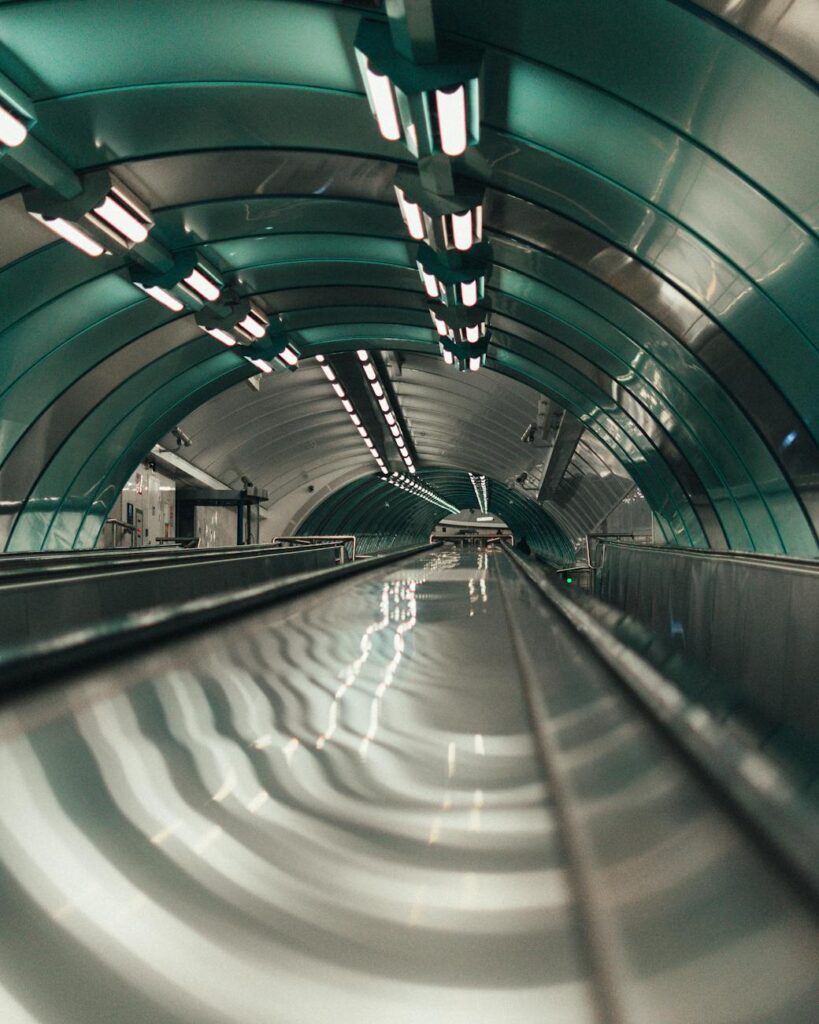

In a decisive move to streamline regional transit, the Ministry of Housing and Urban Affairs (MoHUA) has instructed the National Capital Region Transport Corporation (NCRTC) to commence the Ghaziabad‑Jewar Regional Rapid Transit System (RRTS) corridor from Sarai Kale Khan. This directive, announced on 17 December 2025, reshapes the original alignment plan and promises a faster, more integrated link between Delhi’s southern gateway and the burgeoning industrial hubs of Ghaziabad and Jewar. The decision is expected to cut travel time, de‑congest existing roadways, and boost economic activity across the National Capital Region (NCR). The article below unpacks the corridor’s revised route, construction milestones, commuter benefits, and the challenges that lie ahead.
Revised corridor alignment and scope
The Ghaziabad‑Jewar RRTS line, originally slated to start from IGI Airport, now originates at Sarai Kale Khan, a major inter‑modal hub connecting Delhi Metro, Indian Railways, and bus services. From this point, the elevated track will traverse the Delhi‑Ghaziabad Expressway, cross the Yamuna River via the existing bridge, and continue north‑east through Ghaziabad before reaching the upcoming Jewar Airport in Uttar Pradesh. The total length remains at 73 km, with 55 km elevated and 18 km underground, accommodating 18 stations designed for 200 km/h operation.
MoHUA’s directive and its strategic implications
MoHUA’s order, issued through an official circular, emphasizes three core objectives:
- Seamless multimodal integration – leveraging Sarai Kale Khan’s connectivity to reduce first‑mile/last‑mile gaps.
- Accelerated project delivery – shifting the start point eliminates the need for a separate feeder line, cutting estimated costs by ₹1,200 crore.
- Enhanced regional equity – providing faster access for commuters from Ghaziabad and surrounding districts to Delhi’s economic core.
The directive also mandates NCRTC to submit a revised Detailed Project Report (DPR) within 45 days, incorporating updated land‑acquisition plans and environmental clearances.
Construction progress and key milestones
As of today, the project is in the advanced pre‑construction phase. Land acquisition for the Sarai Kale Khan stretch is 92 % complete, while civil works on the elevated sections between Ghaziabad and Jewar have commenced. The following table outlines the latest timeline:
| Milestone | Target Completion | Status (as of 18 Dec 2025) |
|---|---|---|
| Revised DPR submission | 30 Jan 2026 | In progress |
| Land acquisition (Sarai Kale Khan‑Ghaziabad) | 15 Mar 2026 | 92 % done |
| Start of civil works (elevated) | 1 Apr 2026 | Commenced |
| Underground tunnelling (Jewar‑Ghaziabad) | 30 Sep 2027 | Planning stage |
| Trial runs and safety certification | 31 Mar 2029 | Projected |
| Commercial operation launch | 1 Jun 2029 | Projected |
Impact on commuters and regional development
When fully operational, the corridor is expected to serve 1.8 million passengers daily, slashing travel time between Sarai Kale Khan and Jewar Airport from over two hours to under 45 minutes. The high‑speed service will also stimulate real‑estate growth along the corridor, with projected commercial floor‑space additions of ₹4,500 crore by 2032. Moreover, the RRTS will dovetail with the upcoming Delhi‑Meerut RRTS, creating a networked rapid‑transit backbone for the NCR.
Challenges ahead and future outlook
Despite the optimistic roadmap, several hurdles remain. Land‑acquisition disputes in the Ghaziabad periphery could delay the elevated segment, while environmental clearances for the underground stretch near the Yamuna floodplain demand rigorous assessment. Funding gaps are being addressed through a blend of central allocations, state contributions, and private‑sector participation under a public‑private partnership model. If these challenges are managed effectively, the Ghaziabad‑Jewar RRTS corridor will set a benchmark for rapid, sustainable urban mobility in India.
In summary, MoHUA’s decision to launch the RRTS from Sarai Kale Khan realigns the project with broader multimodal goals, accelerates construction, and promises substantial commuter benefits. The forthcoming months will be critical as NCRTC refines the DPR, secures remaining land, and initiates large‑scale civil works. Successful execution will not only transform daily travel for millions but also catalyze economic growth across the Delhi‑Ghaziabad‑Jewar corridor.
Image by: Roman Ska
https://www.pexels.com/@roman-ska-3453281