
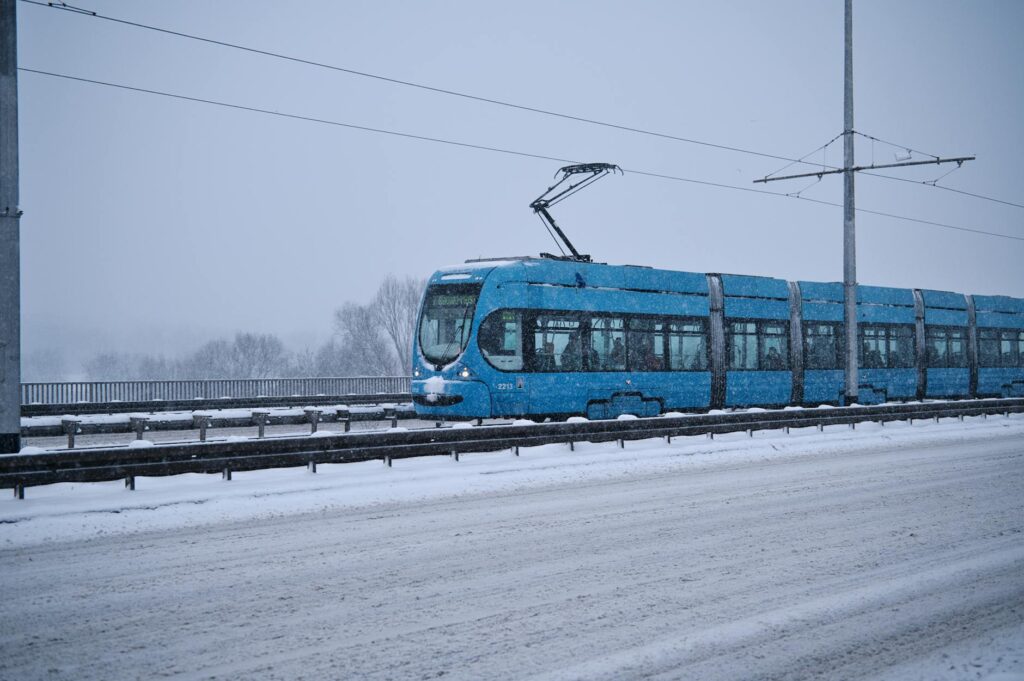

Delhi and much of North India are battling an intense cold wave that has ushered in dense fog, a sharp drop in temperatures, and deteriorating air quality. The Indian Meteorological Department (IMD) predicts a dip of up to 3 °C in maximum temperatures across the region, while the Air Quality Index (AQI) remains in the ‘poor’ category, especially in the capital. Residents are urged to take precautions against hypothermia and respiratory issues as the cold front lingers. This article examines the meteorological backdrop, the impact on air quality, the health advisories issued, and what the next few days may hold for commuters and vulnerable populations.
Cold wave sweeps across Delhi
The Indian Meteorological Department issued a cold wave alert for Delhi on January 6, 2026, citing a rapid influx of arctic air from the west. Overnight lows are expected to hover around -5 °C, a rare occurrence for the city’s winter season. Dense fog has reduced visibility to under 200 m in many parts of the National Capital Region, causing disruptions to road and rail traffic. The combination of low temperatures and high humidity has also intensified the feeling of cold, prompting schools and offices to consider delayed start times.
Air quality under strain
While the cold front itself does not generate pollutants, the stagnant atmospheric conditions trap existing particulate matter close to the ground. The AQI in Delhi has hovered between 180 and 210, classifying the air as poor according to the AQI monitoring network. Major pollutants include PM2.5, PM10, and nitrogen dioxide, levels that exceed the National Ambient Air Quality Standards. The Delhi government has activated additional air‑purifying measures, such as increasing the frequency of street‑level sprinklers and issuing a temporary ban on construction activities that stir up dust.
Temperature dip across north india
The cold wave is not limited to Delhi; several northern states are experiencing similar temperature drops. Below is a snapshot of the projected minimum temperatures for the next five days (January 6‑10, 2026) in key cities:
| City | Jan 6 | Jan 7 | Jan 8 | Jan 9 | Jan 10 |
|---|---|---|---|---|---|
| Delhi | -5 °C | -4 °C | -3 °C | -2 °C | -1 °C |
| Lucknow | -3 °C | -2 °C | -1 °C | 0 °C | 1 °C |
| Chandigarh | -4 °C | -3 °C | -2 °C | -1 °C | 0 °C |
| Jaipur | -2 °C | -1 °C | 0 °C | 1 °C | 2 °C |
| Amritsar | -6 °C | -5 °C | -4 °C | -3 °C | -2 °C |
These temperatures represent a 2‑3 °C dip from the seasonal average, underscoring the severity of the cold wave.
Health advisories and public response
The Delhi government, through its Health Department, has issued a series of advisories:
- Stay indoors during peak fog hours (04:00‑08:00 and 18:00‑22:00).
- Wear layered clothing, focusing on thermal innerwear and wind‑proof outer layers.
- Avoid outdoor exercise for at least 30 minutes if AQI exceeds 150.
- Use masks rated N95 or higher to reduce inhalation of fine particulates.
- Monitor vulnerable groups such as children, the elderly, and those with respiratory conditions.
Hospitals have reported a modest rise in cases of cold‑related ailments, including bronchitis and hypothermia. Local NGOs have set up temporary warming shelters in community halls, offering blankets and hot beverages to the homeless.
Looking ahead: forecasts and mitigation
IMD forecasts indicate that the cold front will gradually retreat by the end of the week, with temperatures expected to normalize by early next week. However, the lingering fog may keep AQI levels elevated for another 48‑72 hours. Authorities are advised to continue real‑time monitoring of both temperature and air‑quality metrics, and to coordinate with the Central Pollution Control Board for targeted emission control measures.
Long‑term mitigation strategies, such as expanding green cover, promoting clean‑energy public transport, and upgrading the city’s air‑purification infrastructure, remain crucial to reducing the health impact of future cold waves combined with poor air quality.
Conclusion
The current cold wave has turned Delhi and its neighboring regions into a challenging environment marked by sub‑zero temperatures, dense fog, and a persistently poor AQI. While the immediate threat is expected to ease as the arctic air recedes, the episode highlights the need for robust health advisories, rapid response mechanisms, and sustained environmental policies. Residents are urged to stay vigilant, follow official guidance, and prioritize personal safety until the weather stabilizes.
Image by: Odalv 😉
https://www.pexels.com/@odalv