
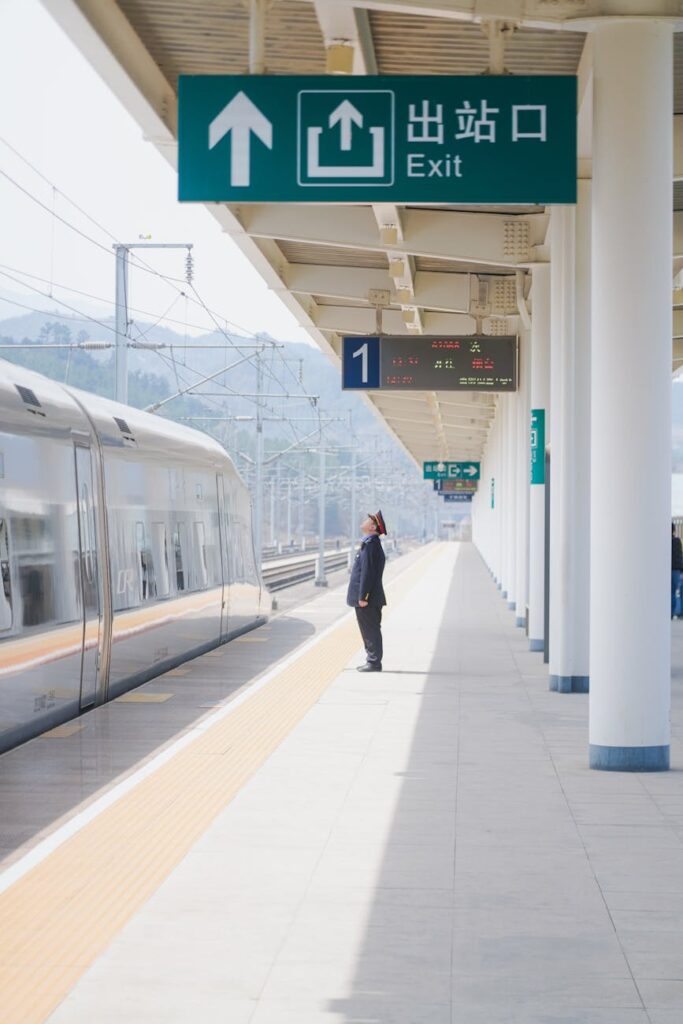

China’s high‑speed rail (HSR) network has officially surpassed the 50,000‑kilometre mark, a distance that now exceeds the combined length of all other countries’ HSR systems. This unprecedented expansion reflects a decade‑long policy push, massive state investment, and a relentless drive to modernise the nation’s transport infrastructure. The milestone not only underscores China’s engineering prowess but also reshapes global logistics, regional development, and the competitive landscape of high‑speed travel. In the sections below, we explore how the network grew so rapidly, the economic ripple effects, the cutting‑edge technology that powers the trains, and what lies ahead for the world’s most extensive rail system.
Expanding the tracks: a decade of growth
Since the launch of the first commercial high‑speed line between Beijing and Tianjin in 2008, China has pursued an aggressive expansion strategy. Annual investments averaged US$30 billion, funded by central and provincial budgets, as well as state‑owned enterprises. The result is a dense web of corridors linking major megacities, coastal hubs, and inland provinces. A concise overview of the network’s growth is shown in the table below.
| Year | Length (km) |
|---|---|
| 2020 | 38,000 |
| 2021 | 40,000 |
| 2022 | 42,500 |
| 2023 | 45,000 |
| 2024 | 48,000 |
| 2025 | 50,200 |
By the end of 2025, the network now stretches over 50,000 km, eclipsing the combined total of the United States, Japan, France, Spain, Germany, and other HSR‑operating nations. The Wikipedia overview provides a detailed route map for reference.
Economic engine: how the rail fuels development
The rail’s impact extends far beyond passenger convenience. Regions newly connected to the HSR grid have seen GDP growth rates 1.5‑2 percentage points higher than the national average, according to a study by the National Bureau of Regional Economics. Key benefits include:
- Reduced travel time: Beijing‑Shanghai travel now takes under 4.5 hours, cutting business trip durations by up to 30 %.
- Tourism boost: Cities like Xi’an and Chengdu have reported a 25 % rise in tourist arrivals since HSR service began.
- Logistics efficiency: Freight corridors parallel to passenger lines have lowered cargo costs by an estimated 12 %.
These gains have spurred urbanisation along the corridors, prompting new residential and commercial projects that further stimulate local economies.
Tech edge: innovations behind the speed
China’s rail advantage stems from a blend of indigenous design and strategic technology acquisition. Notable innovations include:
- CR400AF “Fuxing” trains: Capable of cruising at 350 km/h, these units feature lightweight aluminium alloy bodies and advanced aerodynamic shaping.
- Smart signalling: The China Train Control System (CTCS) employs real‑time data analytics to optimise train intervals, enhancing safety and capacity.
- Energy efficiency: Regenerative braking recovers up to 30 % of kinetic energy, feeding it back into the grid.
Continuous R&D has also produced next‑generation maglev prototypes, hinting at future speeds exceeding 600 km/h.
Future on the horizon: next phases and global influence
Looking ahead, the Chinese government has outlined a “Railway Modernisation Plan 2035” targeting an additional 20,000 km of high‑speed lines, including cross‑border projects such as the Belt‑and‑Road Initiative extensions into Southeast Asia and Europe. Internationally, China is exporting its HSR expertise through contracts in Indonesia, Thailand, and the United Kingdom, positioning itself as the de‑facto global standard‑setter.
Critics caution about debt sustainability and environmental concerns, yet the prevailing narrative frames the network as a catalyst for a greener, more connected future. As the system continues to expand, its influence on global transport policy and technology will likely deepen.
In summary, China’s achievement of a 50,000‑kilometre high‑speed rail network marks a historic leap that dwarfs the rest of the world’s combined infrastructure. The rapid expansion has driven regional economic growth, showcased cutting‑edge rail technology, and set the stage for ambitious future projects that could reshape international transport dynamics.
Image by: travelers_tw
https://www.pexels.com/@travelers_tw-1445512897