
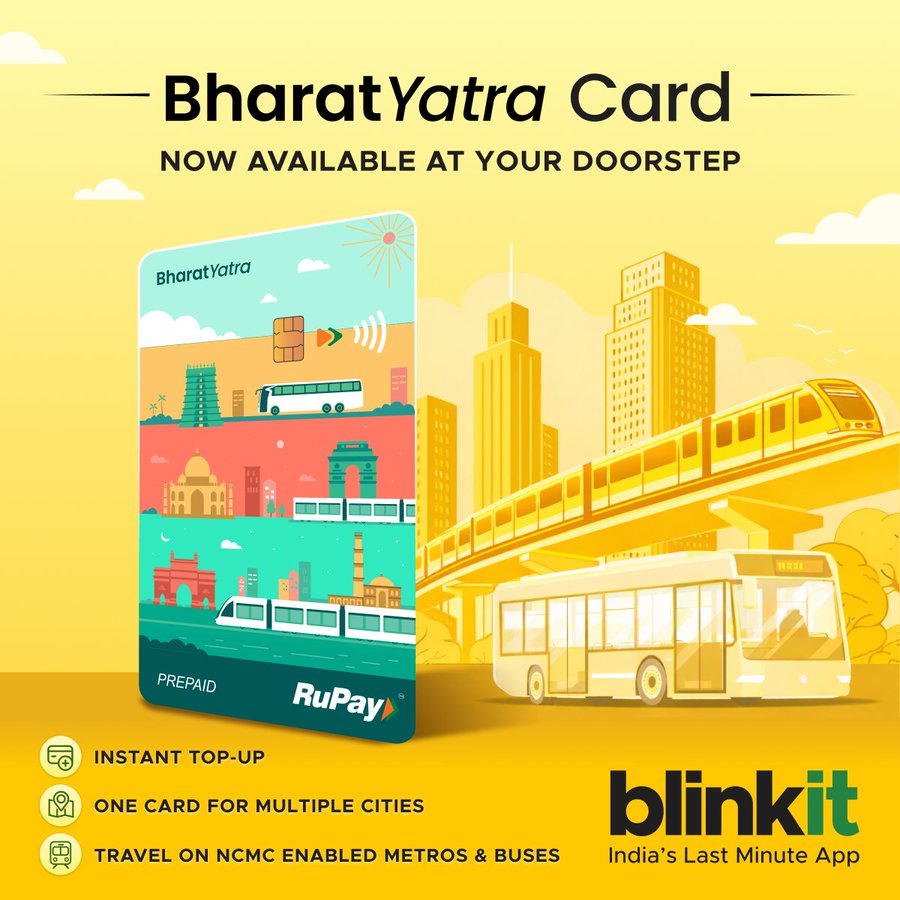

Quick-commerce platform Blinkit has expanded its services beyond groceries and essentials, now offering home delivery of the ₹50 NCMC Bharat Yatra Card. The rollout begins Tuesday across Delhi-NCR, Bengaluru, Mumbai, Chennai, and Ahmedabad, marking a new step in simplifying access to public transport payments.
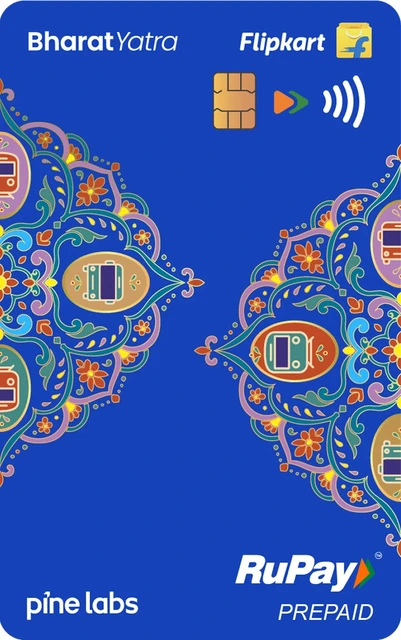
The Bharat Yatra Card is part of India’s National Common Mobility Card (NCMC) initiative and is powered by Pine Labs in partnership with RuPay. Designed for contactless travel, the card enables commuters to pay seamlessly across multiple transport systems using a single card.
How the Card Works
Users can register for the card using their mobile number through the Bharat Yatra app. Once activated, the card can be topped up via UPI with amounts of up to ₹2,000, making it suitable for daily travel needs. The card supports contactless payments on metros and buses, including the Delhi Metro, Mumbai’s BEST, and several other urban transport networks.
Blinkit’s Push Into Civic Convenience
Announcing the move, Blinkit CEO Albinder Dhindsa described the initiative as a “meaningful step” toward improving everyday public transport experiences. By delivering the card directly to users’ homes, Blinkit aims to remove the friction of standing in queues or searching for metro counters, especially for first-time users and frequent city travelers.
User Reactions: Convenience With Caveats
Early users have welcomed the move, calling it a practical solution for commuters and city-hoppers who rely on multiple transport systems. Many praised the ease of registration, quick delivery, and simple UPI top-ups.
However, some users have raised concerns around balance recovery, noting that if the card is lost, retrieving the remaining balance may not be straightforward. This limitation has sparked discussions online, with calls for clearer policies and stronger safeguards for users.
A Step Toward Unified Urban Mobility
With this launch, Blinkit becomes one of the first consumer platforms to bring NCMC cards directly to doorsteps at scale. As Indian cities continue to push for integrated, cashless transport systems, services like this could play a key role in accelerating adoption—provided user protections and awareness keep pace with convenience.
For millions of daily commuters, the message is clear: your next metro card might arrive with your groceries.