
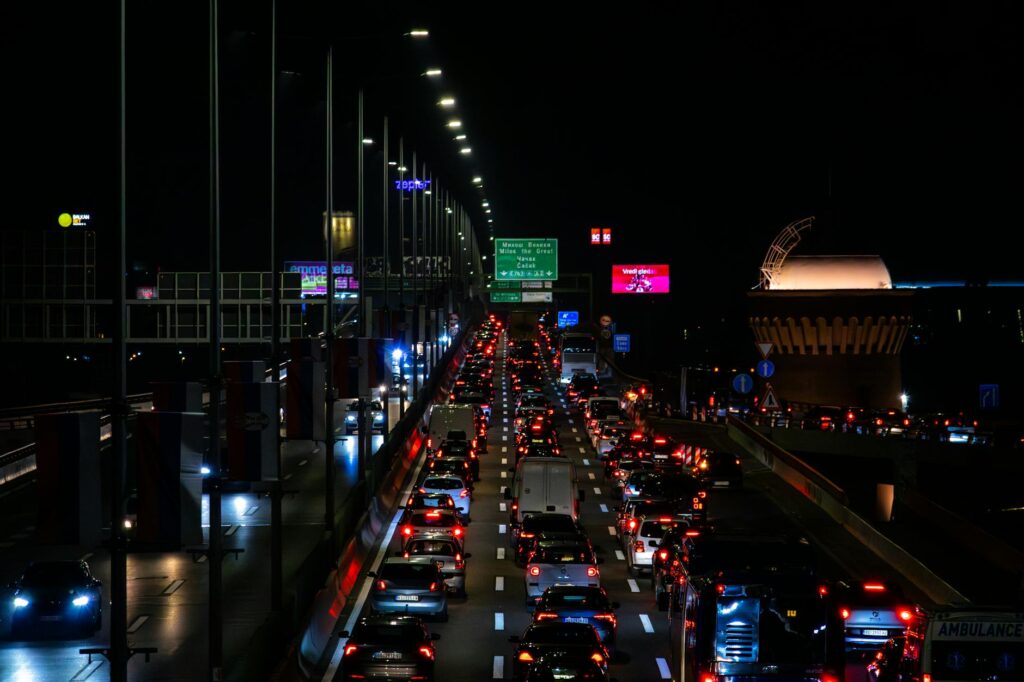

Delhi’s bustling commercial hub, Connaught Place, has become the latest flashpoint in the city’s chronic traffic congestion debate. A coalition of traders operating in the iconic market has formally written to the Delhi government, urging officials to halt the operation of Delhi Transport Corporation’s (DTC) mini‑bus services that ply the narrow lanes surrounding the area. The traders argue that the additional vehicles exacerbate bottlenecks, jeopardise pedestrian safety and threaten the livelihood of shop‑owners who already contend with dwindling footfall. The petition, submitted on 22 December 2025, reflects growing frustration among local businesses and raises questions about the balance between public transport accessibility and urban mobility in India’s capital.
Traders’ petition to the government
The merchants’ letter, addressed to the Delhi government, outlines three core grievances:
- Increased traffic density caused by the frequent ingress and egress of DTC mini‑buses on Connaught Place’s already constrained road network.
- Safety concerns for pedestrians and delivery vans navigating the crowded sidewalks.
- Economic impact as prolonged congestion discourages shoppers from visiting the market.
Signatories, representing over 150 shops, have requested the authorities to either reroute the mini‑bus routes away from the central business district or replace them with larger, higher‑capacity buses that make fewer stops.
Impact of mini buses on Connaught Place traffic
Recent traffic surveys conducted by the Delhi Traffic Police reveal that the average vehicle count on the inner ring of Connaught Place peaked at 7,800 vehicles per hour on weekdays in November 2025 – a 12 % rise compared with the same period in 2023. Mini‑buses, which typically carry 15‑20 passengers, account for roughly 18 % of that volume. The following table summarises the latest traffic data:
| Road segment | Average hourly traffic (Nov 2025) | Mini‑bus share |
|---|---|---|
| Connaught Place – Inner Ring | 7,800 vehicles | 1,400 (18 %) |
| Barakhamba Road | 6,200 vehicles | 1,050 (17 %) |
| Rajiv Chowk Metro Exit | 5,500 vehicles | 950 (17 %) |
The data underscores how the cumulative effect of numerous small vehicles can choke a corridor that was originally designed for larger, less frequent traffic. Moreover, the stop‑and‑go pattern of mini‑buses creates “micro‑queues” at each boarding point, extending delays for surrounding traffic by an estimated 3‑5 minutes per vehicle.
DTC’s stance and operational challenges
The Delhi Transport Corporation acknowledges the concerns but points to the essential role mini‑buses play in connecting peripheral neighborhoods to the city centre. In a statement released on 24 December 2025, DTC officials noted that the mini‑bus fleet operates on over 30 routes that terminate at Connaught Place, serving an estimated 250,000 commuters daily. They argue that removing these services would disproportionately affect low‑income riders who rely on the frequent, short‑haul trips.
Operationally, DTC faces a dilemma: larger buses cannot navigate the narrow lanes without causing even greater disruption, while the mini‑buses, though smaller, still occupy valuable road space. The corporation is currently piloting a “smart‑scheduling” system that spaces departures at 10‑minute intervals instead of the current 5‑minute cadence, hoping to reduce vehicle density without cutting service.
Possible alternatives and policy implications
Urban planners suggest several mitigation strategies that could reconcile the traders’ demands with commuters’ needs:
- Dedicated mini‑bus bays on the periphery of Connaught Place, allowing buses to board and alight without entering the core traffic loop.
- Integrated last‑mile solutions such as e‑rickshaws or bicycle‑share stations that ferry passengers from nearby metro exits to the market.
- Dynamic lane allocation using real‑time traffic data to convert one lane into a reversible “peak‑hour” bus lane during rush periods.
- Fare‑adjusted high‑capacity buses that run on a reduced frequency but carry more passengers per trip, thereby lowering the overall vehicle count.
Each option carries cost and implementation challenges, but they illustrate a broader shift toward multimodal mobility that prioritises both economic activity and sustainable traffic flow.
Conclusion
The petition from Connaught Place traders highlights a pressing clash between commercial interests and public transport policy in a rapidly urbanising Delhi. While the DTC mini‑bus fleet provides vital connectivity for thousands of commuters, its presence undeniably adds to the congestion that threatens the market’s vibrancy. Data from recent traffic surveys confirms that mini‑buses constitute a notable share of vehicular traffic in the area, reinforcing the traders’ call for re‑evaluation. Moving forward, a nuanced approach—combining dedicated boarding zones, smarter scheduling, and alternative last‑mile options—could alleviate pressure on the historic hub without sacrificing essential transit services. The outcome of this debate will likely set a precedent for how Indian cities balance dense commercial districts with the imperatives of modern urban mobility.
Image by: Arsen Laufer
https://www.pexels.com/@arsen-laufer-2158185034