
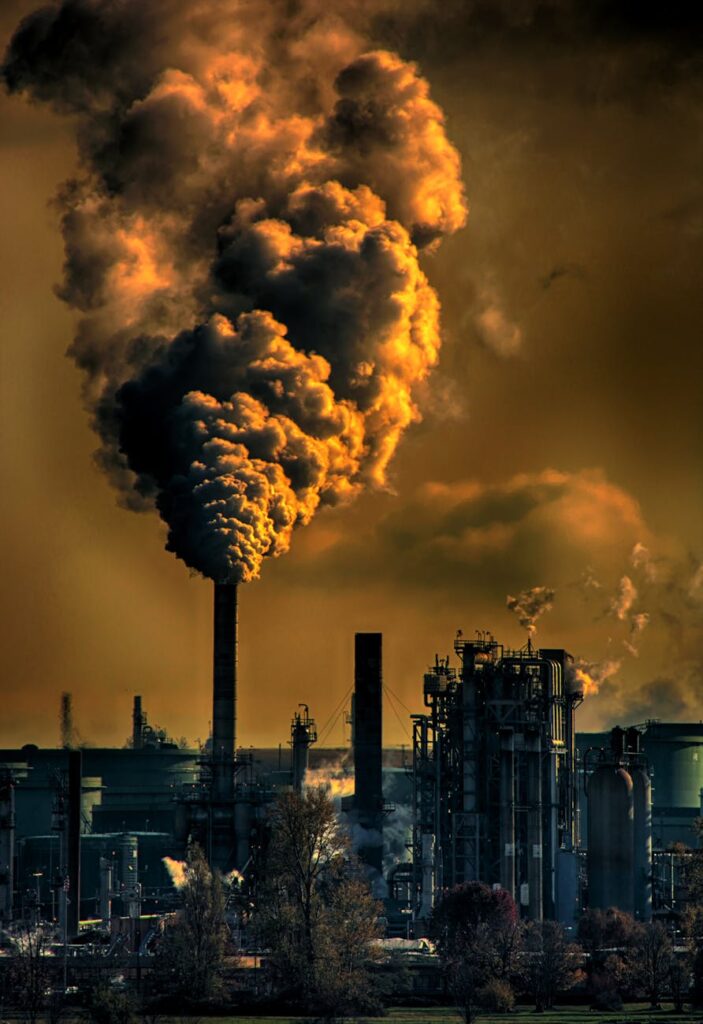

In a landmark decision that could reshape the automotive landscape of India’s capital region, the Supreme Court has upheld the ban on diesel vehicles older than ten years and petrol vehicles older than fifteen years that do not meet the BS‑IV emission standards. The ruling, delivered on 26 April 2024, reinforces the Delhi government’s aggressive push to curb air pollution and aligns with the national agenda of phasing out high‑emitting vehicles. Stakeholders ranging from commuters and fleet operators to environmental activists are now bracing for the practical implications of the order, which mandates compliance across the National Capital Region (NCR). This article unpacks the legal backdrop, the expected impact on traffic and industry, and the broader environmental stakes tied to the verdict.
Background of emission standards in India
India’s emission norms have evolved from the rudimentary BS‑III standard to the more stringent BS‑VI, mirroring global trends toward cleaner air. BS‑IV limits, introduced in 2010, require diesel engines to cut particulate matter (PM) by up to 70 % compared to BS‑III, while petrol engines must reduce carbon monoxide (CO) by 30 %.
| Parameter | BS‑III limit | BS‑IV limit |
|---|---|---|
| PM (diesel) | 0.10 g/km | 0.03 g/km |
| CO (petrol) | 2.1 g/km | 1.5 g/km |
The shift to BS‑IV was a critical step, but the Delhi Pollution Control Committee (DPCC) argued that even BS‑IV vehicles contribute significantly to the region’s smog crisis, especially during winter inversions.
The Supreme Court verdict
In a concise judgment, the Court affirmed the Delhi government’s authority to enforce the ban, citing the constitutional mandate to protect public health. The order references the Right to Life clause, interpreting severe air pollution as a violation of that right. The Court also directed the Ministry of Road Transport and Highways to expedite the issuance of revised registration norms, ensuring that vehicle owners have a clear legal pathway to compliance.
Key takeaways from the ruling:
- All diesel cars older than ten years and petrol cars older than fifteen years that do not meet BS‑IV standards must be deregistered.
- The ban applies to private, commercial, and government fleets within the NCR.
- Owners are given a six‑month window to either scrap the vehicle or upgrade to a compliant model.
Impact on commuters and the automotive industry
For the estimated 2.5 million affected vehicle owners in Delhi NCR, the decision presents both a financial burden and an opportunity. While the cost of scrapping a non‑compliant car can run into ₹30,000–₹50,000, many manufacturers are already rolling out discount schemes for BS‑VI models, which could offset the expense. Fleet operators, especially those running auto‑rickshaws and small buses, are expected to face operational disruptions, prompting a surge in demand for electric alternatives.
Industry analysts predict a short‑term dip in used‑car prices for older diesel models, but a longer‑term boost for newer, cleaner vehicles. The shift also aligns with the government’s National Electric Mobility Mission Plan, which aims for 30 % electric vehicle penetration by 2030.
Environmental and health implications
Delhi’s air quality has hovered in the “severe” category for over a decade, with particulate matter (PM2.5) levels frequently exceeding the World Health Organization’s safe limit of 10 µg/m³. By removing a substantial share of high‑emitting vehicles, the ban could slash PM2.5 concentrations by an estimated 15–20 %, according to a study by the Indian Institute of Technology Delhi.
Reduced emissions translate directly into public‑health gains: fewer cases of respiratory ailments, lower hospital admissions, and a projected saving of ₹4,000 crore in healthcare costs over the next five years. Moreover, the move reinforces India’s commitments under the Paris Agreement to curb greenhouse‑gas emissions.
Looking ahead: enforcement and alternatives
Effective enforcement will hinge on coordinated action between the DPCC, traffic police, and the Ministry of Road Transport. Digital tools such as Automatic Number Plate Recognition (ANPR) cameras are being deployed to flag non‑compliant vehicles in real time. Simultaneously, the government is expanding subsidies for electric two‑wheelers and public‑transport electrification, offering a viable pathway for displaced commuters.
In conclusion, the Supreme Court’s endorsement of the ban marks a decisive step toward cleaner air in Delhi NCR. While the transition poses challenges for vehicle owners and industry players, the anticipated environmental and health benefits present a compelling case for swift, well‑orchestrated implementation.
Image by: Chris LeBoutillier
https://www.pexels.com/@chrisleboutillier