
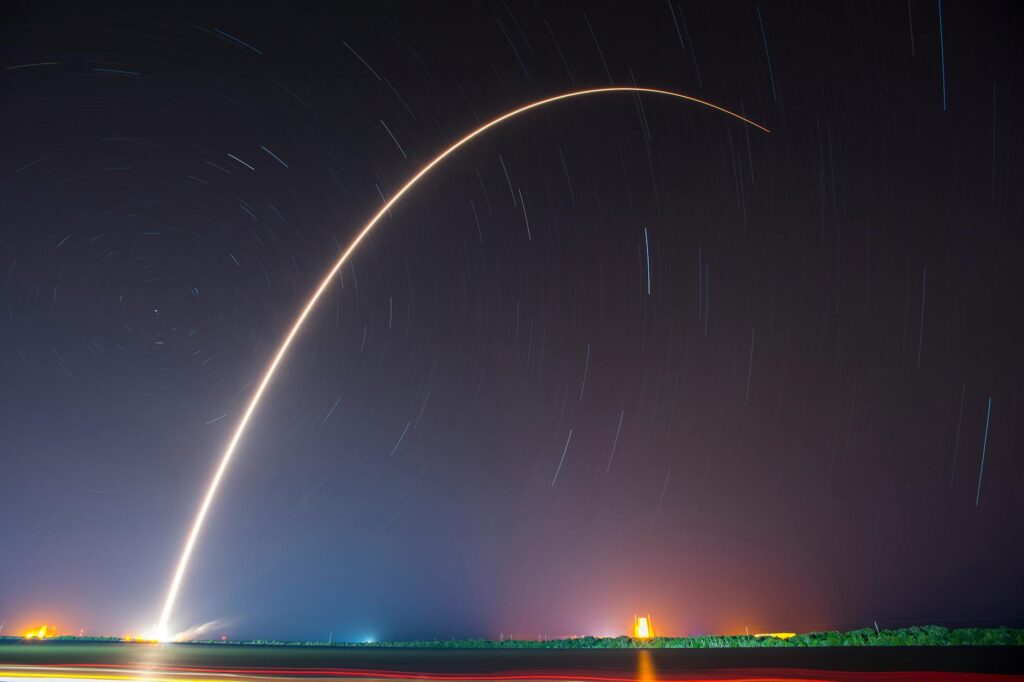

On December 24, the United States successfully launched the BlueBird satellite, a mission that underscores the deepening partnership between American space agencies and India’s Indian Space Research Organisation (ISRO). The launch, conducted from the Satish Dhawan Space Centre in Sriharikota, marks a pivotal moment in trans‑national cooperation, blending cutting‑edge US payload technology with ISRO’s proven launch capabilities. This article explores the background of the BlueBird program, the satellite’s technical profile, the launch sequence coordinated by ISRO, the strategic ramifications for both nations, and what lies ahead for future collaborative ventures in space.
Background of the BlueBird mission
The BlueBird satellite is part of a broader US initiative to augment communication and Earth‑observation capacities in low‑earth orbit. Developed by a consortium of American aerospace firms, the mission aims to provide high‑resolution imaging for climate monitoring and secure data links for defense applications. Funding for the project was approved in early 2022, with a target launch window set for the winter of 2024‑2025. By partnering with ISRO, the United States leveraged a cost‑effective launch solution while reinforcing diplomatic ties.
Technical specifications of the satellite
Designed to operate for a minimum of five years, BlueBird carries a suite of instruments that include a multispectral camera, a synthetic‑aperture radar, and a secure communications payload. Key specifications are summarized in the table below.
| Parameter | Detail |
|---|---|
| Mass | 1,250 kg |
| Orbit | Sun‑synchronous, 600 km altitude |
| Power | 3.5 kW solar arrays |
| Payload | Multispectral imager, SAR, secure comms |
| Mission life | ≥5 years |
Launch timeline and ISRO’s role
The launch sequence was meticulously planned to align with both ISRO’s launch calendar and the satellite’s orbital insertion requirements. Key milestones included:
- Pre‑launch integration: Completed at ISRO’s Integration Facility in early December.
- Static fire test: Conducted on December 15, confirming the performance of the PSLV‑XL launch vehicle.
- Lift‑off: Occurred at 02:45 UTC on December 24, with the PSLV‑XL carrying BlueBird into a precise trajectory.
- Orbit insertion: The satellite separated successfully after a 12‑minute coast phase, followed by a series of on‑orbit checks.
ISRO’s expertise in launch operations, ground support, and telemetry ensured a seamless mission, reinforcing its reputation as a reliable partner for high‑value international payloads.
Strategic implications for US‑India space cooperation
The successful deployment of BlueBird carries several strategic benefits. For the United States, it expands the constellation of observation assets critical for climate resilience and national security. For India, the mission showcases ISRO’s growing capability to host sophisticated foreign payloads, potentially attracting more commercial and governmental contracts. Moreover, the collaboration signals a shift toward a more integrated Indo‑American space architecture, paving the way for joint ventures in lunar exploration, deep‑space communication, and shared data ecosystems.
Future outlook and next steps
With BlueBird now operational, both agencies are already discussing the next phase of cooperation. Proposed initiatives include a dual‑satellite program for real‑time disaster monitoring and a joint research hub at the NASA‑ISRO interface. Continued investment in shared launch infrastructure and technology transfer agreements is expected to accelerate the timeline for more ambitious missions, such as lunar surface experiments slated for the late 2020s.
Conclusion: The December 24 launch of the US BlueBird satellite, executed by ISRO, exemplifies how strategic partnerships can deliver cutting‑edge space capabilities while strengthening diplomatic bonds. By combining American payload innovation with Indian launch reliability, the mission not only meets immediate operational goals but also sets a robust foundation for future collaborative ventures in the rapidly evolving arena of space exploration.
Image by: SpaceX
https://www.pexels.com/@spacex