
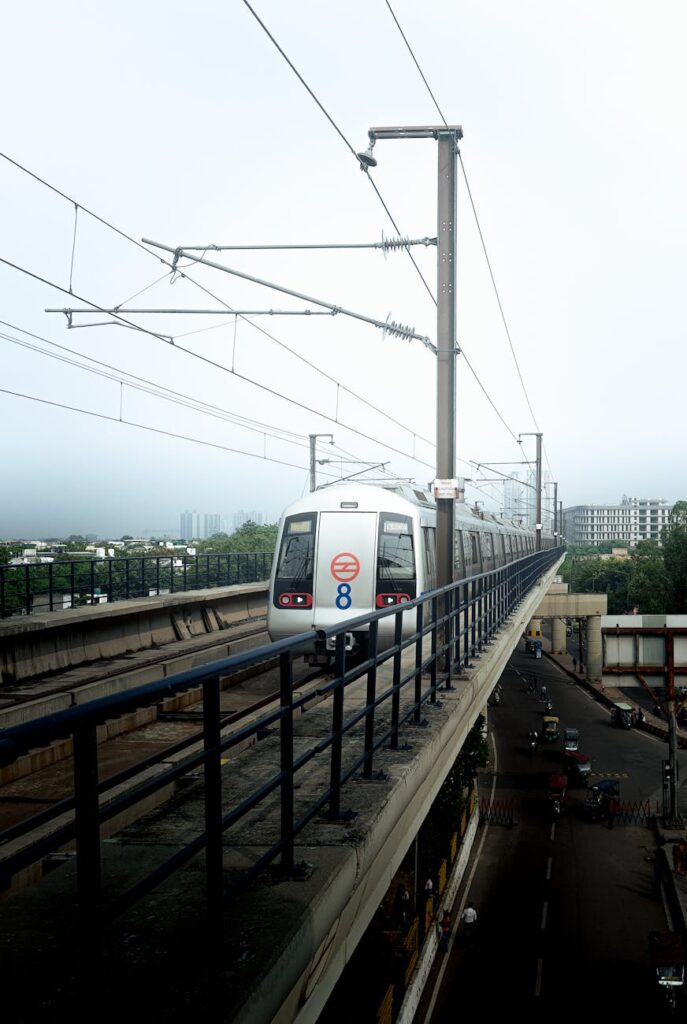

India’s rail safety shield, Kavach, has crossed the 2,000‑kilometre mark in a remarkably swift deployment, as disclosed by Railway Minister Piyush Goyal’s deputy, Ashwini Vaishnaw, during a Lok Sabha debate. The indigenous anti‑collision system, designed to prevent signal passing at danger (SPAD) and rear‑end collisions, is now active on a network stretching from the bustling corridors of the north to the coastal lines of the south. The announcement underscores the government’s resolve to modernise a legacy network that carries over 23 million passengers daily, while also highlighting the logistical and technical challenges that accompany such an ambitious rollout.
Rapid rollout progress
The Ministry of Railways reported that the Kavach installation has advanced at a pace that outstrips earlier projections. By the end of 2023, roughly 500 km of track were equipped. This figure rose to 1,200 km by December 2024, and accelerated to 1,800 km in the first quarter of 2025. The latest data, released in September 2025, confirms that the system now covers 2,000 km, representing a 40 % increase over the previous year.
| Period | Km covered |
|---|---|
| 2023 (full year) | 500 km |
| 2024 (full year) | 1,200 km |
| 2025 Q1 | 1,800 km |
| 2025 Q3 (as of Sep) | 2,000 km |
These numbers are sourced from the official Lok Sabha transcript, which can be accessed here.
Technical overview of Kavach
Kavach integrates track‑side transponders, on‑board radios, and a centralised control system that continuously monitors train positions. When a potential conflict is detected, the system automatically applies brakes, reducing the risk of a collision by up to 95 % in simulated trials. Unlike legacy signalling, Kavach does not rely on line‑of‑sight, making it effective in fog, heavy rain, and night conditions that frequently plague Indian routes.
Impact on safety and operations
Since its pilot launch on the Delhi‑Kanpur corridor in 2021, Kavach has been credited with preventing three near‑miss incidents. The expanded coverage is expected to cut SPAD occurrences by at least 30 % across the newly equipped sections. Moreover, the system’s real‑time data feeds enable dispatchers to optimise train spacing, potentially improving average network speed by 5–7 km/h without compromising safety.
Challenges and future expansion
Despite the momentum, the rollout faces hurdles. Retrofitting older rolling stock, training staff across 1,300 stations, and ensuring seamless interoperability with the upcoming European Train Control System (ETCS) demand sustained investment. The Ministry has earmarked ₹12,000 crore for the next phase, which aims to extend Kavach to 5,000 km by 2028, prioritising high‑traffic corridors such as Mumbai‑Ahmedabad and Kolkata‑Chennai.
Political and policy context
The Kavach initiative aligns with the broader Make in India agenda, showcasing domestic engineering capability. Vaishnaw’s remarks in the Lok Sabha highlighted the project as a benchmark for public‑private collaboration, noting that several Indian firms are now part of the supply chain. The rapid deployment also serves as a political signal ahead of the upcoming general elections, reinforcing the government’s narrative of modernising critical infrastructure.
Conclusion
Crossing the 2,000‑kilometre threshold marks a decisive step for Indian Railways in its quest to deliver a safer, more reliable travel experience. The Kavach system’s proven technology, combined with aggressive policy support and substantial funding, is poised to reshape rail safety standards across the nation. While challenges remain—particularly in scaling to the ambitious 5,000‑kilometre target—the current trajectory suggests that India is on track to set a new benchmark for rail safety in the developing world.
Image by: Aryan Sharma
https://www.pexels.com/@aryan-sharma-471587287