
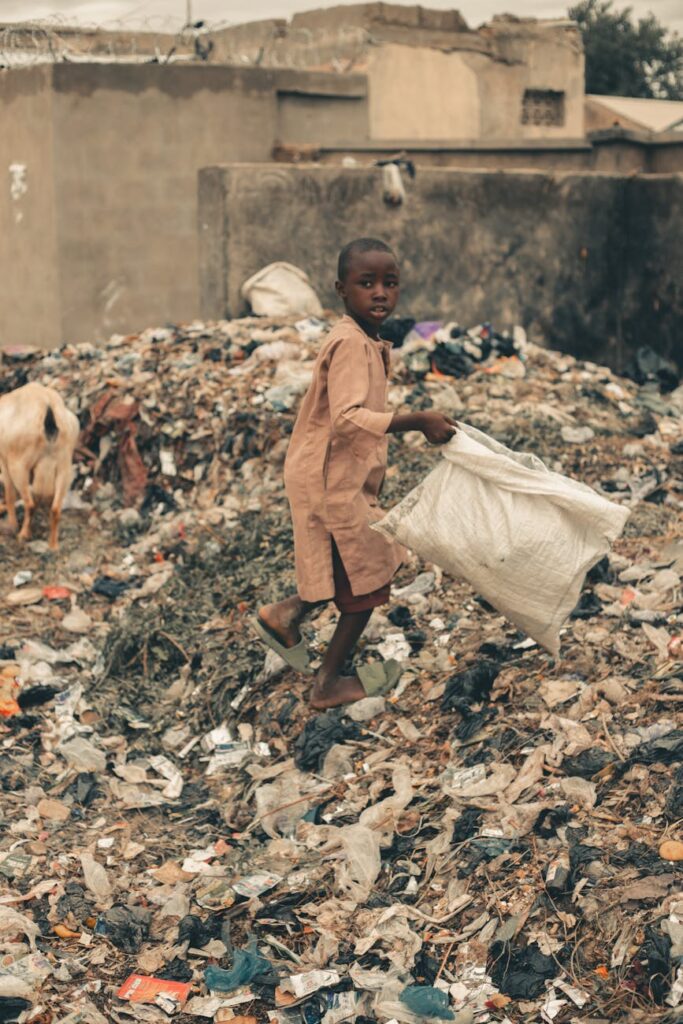

Karan Kumar, a 20‑year‑old from Delhi, has turned a personal mission into a city‑wide movement that has recycled more than 450 tonnes of waste and provided stable income to 70 waste pickers. Through his startup Finobadi, he combines low‑cost technology with community‑first principles, showing how young innovators can reshape urban waste management. This article explores the origins of his venture, the mechanics of his recycling model, the social upliftment of informal waste collectors, the measurable environmental gains, and the roadmap for scaling the solution across India’s megacities.
From a small garage to a city‑wide solution
What began in a cramped garage on the outskirts of Delhi quickly grew into a structured enterprise after Karan witnessed the daily struggles of waste pickers who scraped a living from the city’s overflowing bins. Inspired by a visit to a local Swachh Bharat initiative, he sketched a plan to formalise waste collection, add value through segregation, and sell recyclables at market rates. Within a year, his modest setup expanded to a network of collection points that now serve neighborhoods from Rohini to South Delhi.
Building Finobadi: the model that turns trash into revenue
Finobadi operates on three simple pillars: segregation at source, transparent pricing, and digital tracking. Karan introduced low‑cost colour‑coded bins that enable households to separate organic, plastic, metal and paper waste. Each bin is tagged with a QR code that logs the weight of material deposited, allowing the company to pay pickers a fair, weight‑based rate that is 30 % higher than the informal market average. The data is uploaded to a cloud dashboard, giving donors, NGOs and municipal bodies real‑time insight into waste flows.
Empowering waste pickers with fair wages and dignity
Before Finobadi, most of the 70 pickers worked on a daily‑hand‑to‑mouth basis, often earning less than ₹150 per day. By guaranteeing a minimum wage of ₹250 and providing health insurance through a partnership with Aarogya, the venture has lifted the average household income by roughly 70 %. Moreover, the pickers now wear branded uniforms and receive identification cards, shifting public perception from “scavenger” to “environmental steward.” Regular skill‑building workshops on safe handling and basic bookkeeping further cement their role as professional workers.
Environmental impact: numbers that matter
Finobadi’s systematic approach translates into tangible ecological benefits. In 2025 alone, the organization reported the following figures:
| Metric | 2025 Total | Unit |
|---|---|---|
| Waste collected | 450 | Tonnes |
| Plastic recovered | 120 | Tonnes |
| Organic waste composted | 200 | Tonnes |
| Pickers employed | 70 | People |
| CO₂ emissions avoided | 1,350 | Metric tons |
These numbers not only reduce landfill pressure but also generate enough compost to fertilise over 5,000 sq m of urban gardens, supporting Delhi’s growing “green‑city” agenda.
Future roadmap and lessons for other cities
Karan’s next phase focuses on replicating the model in other Indian metros such as Mumbai and Bengaluru. He is courting the Ministry of Housing and Urban Affairs for policy support and seeking venture capital to scale the digital platform. Key takeaways for policymakers include the importance of integrating informal workers into formal waste streams, leveraging simple technology for transparency, and aligning revenue incentives with environmental outcomes.
Conclusion
By turning 450 tonnes of waste into economic opportunity and environmental gain, Karan Kumar demonstrates how youthful ingenuity can rewrite the narrative of urban waste. Finobadi’s blend of technology, fair‑pay principles, and community engagement offers a replicable blueprint for Indian cities grappling with mounting solid‑waste challenges. As the model expands, it promises not only cleaner streets but also a dignified livelihood for thousands of waste pickers, proving that sustainability and social equity can grow together.
Image by: Moh DIKKO Photography
https://www.pexels.com/@moh-dikko-photography-2151327861