
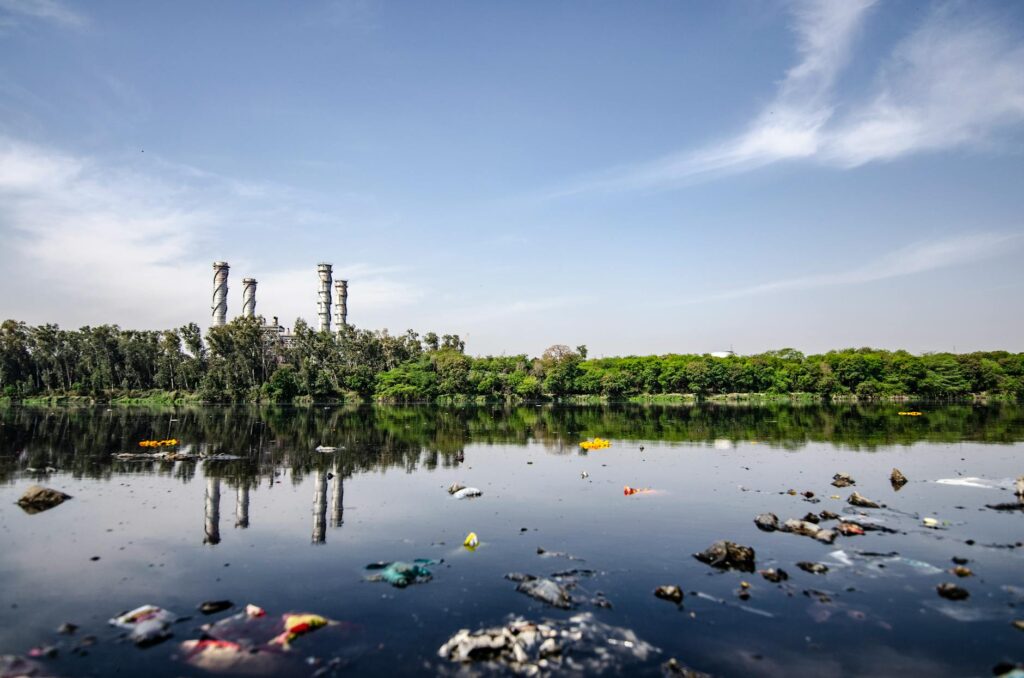

Delhi NCR continues to grapple with hazardous air quality, especially during winter months when particulate matter spikes to dangerous levels. Recent litigation has brought the spotlight onto traffic‑induced emissions, prompting the Supreme Court to issue a landmark directive aimed at curbing pollution sources. The apex court instructed the Municipal Corporation of Delhi (MCD) and the National Highways Authority of India (NHAI) to dismantle or relocate nine high‑traffic toll booths that act as choke points, trapping exhaust fumes and worsening the smog blanket over the capital region. This article unpacks the court’s order, the toll booths identified, the mitigation strategies proposed by the authorities, and the projected environmental benefits of the move.
Supreme court intervention
The Supreme Court, responding to a public interest litigation filed by environmental groups, issued a detailed judgment on 15 December 2025. The bench emphasized that toll plazas, especially those situated on arterial corridors, create micro‑environments where idling vehicles emit high concentrations of PM2.5, nitrogen oxides, and volatile organic compounds. By directing the MCD and NHAI to eliminate nine specific toll booths, the court aims to restore smoother traffic flow and reduce stagnant emissions that contribute to Delhi’s chronic smog.
The nine toll booths under scrutiny
Based on traffic studies and air‑quality monitoring data, the following toll plazas were singled out:
| Toll Booth | Location (Road) | Average Daily Traffic (vehicles) | Projected PM2.5 reduction (µg/m³) |
|---|---|---|---|
| Gurgaon‑Manesar | NH‑48 | 210,000 | 4.2 |
| Bahadurgarh‑Jharoda | NH‑9 | 165,000 | 3.5 |
| Meerut‑Baraut | NH‑34 | 140,000 | 3.1 |
| Ghaziabad‑Noida | NH‑24 | 190,000 | 4.0 |
| Hapur‑Bulandshahr | NH‑9 | 120,000 | 2.8 |
| Faridabad‑Ballabgarh | NH‑44 | 175,000 | 3.9 |
| Shahdara‑Kashmere Gate | Ring Road | 130,000 | 2.9 |
| Dwarka‑Mahipalpur | NH‑8 | 155,000 | 3.3 |
| Rohini‑Mundka | NH‑1 | 115,000 | 2.5 |
Collectively, the removal or redesign of these booths is expected to cut Delhi’s annual PM2.5 load by roughly 30,000 tonnes, a figure that aligns with the city’s target of a 30 % reduction by 2030.
MCD and NHAI response plan
Both agencies have submitted a joint action plan to the court, outlining three core measures:
- Relocation or conversion: Six booths will be shifted to nearby service roads, while three will be transformed into electronic free‑flow lanes that eliminate the need for vehicle stoppage.
- Infrastructure upgrades: Installation of real‑time traffic monitoring sensors and adaptive signal control to prevent bottlenecks once the booths are removed.
- Green buffers: Planting of native, fast‑growing trees along the former toll corridors to act as bio‑filters for residual pollutants.
The plan also commits to a quarterly public dashboard, accessible on the MCD portal, where citizens can track traffic flow, emission levels, and progress of the green‑belt initiatives.
Projected environmental impact
Air‑quality models calibrated by the Indian Institute of Tropical Meteorology (IITM) suggest that the combined interventions could deliver:
- A 12 % reduction in peak‑hour PM2.5 concentrations across the NCR.
- Lower incidence of respiratory ailments, potentially preventing approximately 1,200 hospital admissions each winter.
- Economic gains estimated at ₹ 850 crore annually from reduced health costs and improved worker productivity.
These outcomes hinge on strict enforcement of the court’s timeline – the agencies have been given 90 days to commence demolition or conversion works.
Challenges and next steps
While the directive is a decisive step, several hurdles remain:
- Land acquisition: Shifting toll plazas requires acquiring adjoining land, a process that may encounter legal disputes.
- Public acceptance: Drivers accustomed to traditional toll collection may resist electronic free‑flow systems, necessitating extensive awareness campaigns.
- Coordination: Synchronising actions between MCD, NHAI, and the Delhi Pollution Control Committee (DPCC) is critical to avoid fragmented implementation.
Stakeholders have pledged to convene a monthly coordination committee, and the Supreme Court has mandated a mid‑term review on 30 March 2026 to assess compliance and real‑world impact.
Conclusion
The Supreme Court’s order to eliminate nine high‑traffic toll booths marks a pivotal moment in Delhi’s fight against air pollution. By targeting choke points that trap vehicular emissions, the directive promises measurable improvements in air quality, public health, and economic productivity. Successful execution will depend on swift action from MCD and NHAI, transparent monitoring, and community buy‑in. If the plan stays on track, Delhi could set a replicable precedent for other megacities grappling with traffic‑related smog, turning legal intervention into tangible environmental gain.
Image by: Yogendra Singh
https://www.pexels.com/@yogendras31