

Introduction
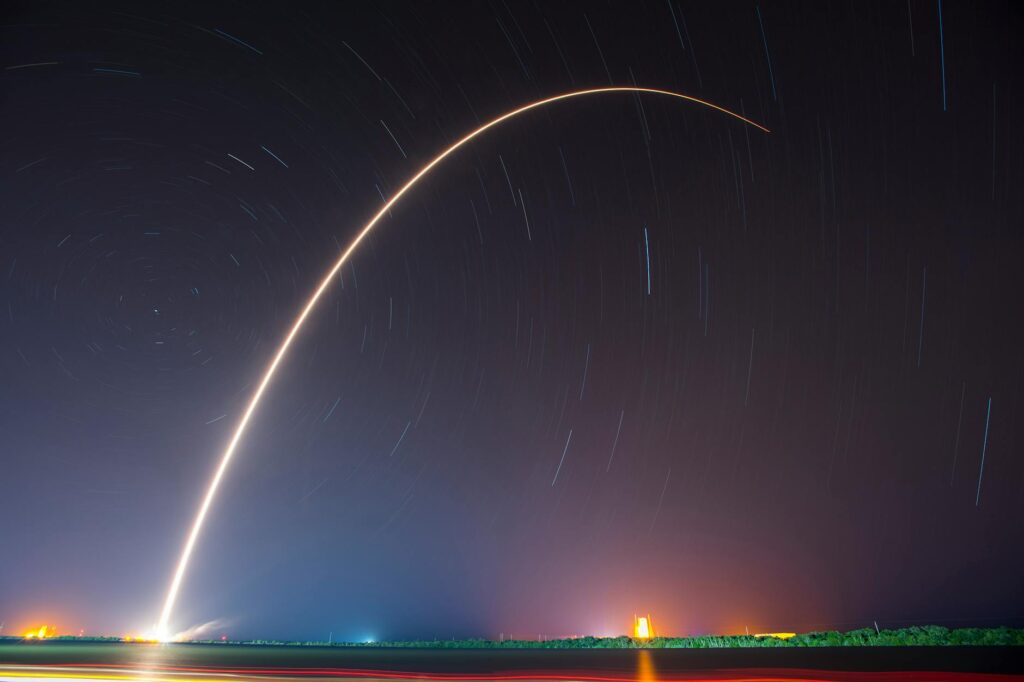
On 30 May 2023, the Polar Satellite Launch Vehicle (PSLV‑C62) lifted off from the Satish Dhawan Space Centre, carrying a classified electronic intelligence satellite that many expected to bolster India’s strategic capabilities. While the launch was visually flawless, the mission did not follow its planned trajectory, prompting ISRO chief V. Narayanan to clarify that the satellite never reached its intended orbit. This article delves into the technical backdrop of the PSLV‑C62 flight, the statements from ISRO leadership, the implications for India’s space‑based surveillance assets, and the broader context of the nation’s growing ambitions in the high‑stakes arena of space security.
Technical overview of the PSLV‑C62 flight
The PSLV‑C62 was the 62nd mission of India’s workhorse launch vehicle, a four‑stage rocket that has delivered more than 350 satellites into orbit since its debut in 1993. The payload for this flight was a classified electronic intelligence (ELINT) satellite, often referred to in media as a “spy satellite.” The mission profile called for a low‑Earth sun‑synchronous orbit (SSO) at an altitude of roughly 720 km, optimal for persistent surveillance and signal‑interception.
| Parameter | Details |
|---|---|
| Launch date | 30 May 2023 |
| Launch vehicle | PSLV‑C62 |
| Payload | Classified ELINT satellite (often cited as EMISAT‑2) |
| Intended orbit | Sun‑synchronous, 720 km altitude |
| Outcome | Did not achieve intended orbit; satellite placed in a lower, non‑operational orbit |
The launch itself proceeded without incident: the first stage ignited, the vehicle cleared the pad, and all four stages performed nominally for the first 15 minutes. However, telemetry later revealed a deviation in the fourth‑stage burn, resulting in an orbit that was 150 km lower than planned.
ISRO’s official response
In a press briefing held on 2 June 2023, ISRO chairman V. Narayanan addressed the anomaly. He emphasized that the launch vehicle “could not proceed in the expected path” due to an “unforeseen technical glitch in the fourth‑stage navigation system.” Narayanan assured that a thorough investigation was underway, involving both internal experts and external consultants, and that the agency would publish a detailed report within 90 days.
He also clarified that the mission’s primary objective – to place the satellite into its operational orbit – was not met, but that the launch vehicle’s performance up to stage‑three remained “fully successful.” The chief reiterated ISRO’s commitment to transparency, stating that “every setback is a learning opportunity that strengthens our future missions.”
Strategic implications for India’s space‑based intelligence
The failure to insert the ELINT satellite into its designated orbit has immediate operational consequences. Analysts note that a sun‑synchronous orbit at 720 km allows for consistent lighting conditions and global coverage, essential for high‑resolution signal collection. A lower orbit reduces the satellite’s field of view and shortens its lifespan due to increased atmospheric drag.
Nevertheless, experts argue that the setback is unlikely to cripple India’s overall intelligence architecture. The nation already operates a constellation of RISAT‑2 series radar imaging satellites and the earlier EMISAT (launched in 2019). Moreover, ISRO is preparing the next generation of ELINT platforms under the “Mission X” program, slated for launch in 2025.
- Short‑term impact: Reduced coverage and delayed data acquisition for the specific satellite.
- Medium‑term outlook: Accelerated testing of navigation algorithms for the PSLV’s upper stage.
- Long‑term strategy: Diversification of launch providers, including the upcoming GSLV‑Mk III, to mitigate single‑point failures.
Broader context: India’s rising role in space security
India’s ambition to field its own reconnaissance and ELINT satellites reflects a global trend where space is increasingly viewed as a contested domain. The PSLV‑C62 episode underscores the technical challenges inherent in achieving reliable, repeatable access to precise orbits – a capability that traditional space powers have refined over decades.
International observers note that while India’s civilian space program enjoys a stellar reputation, its military‑grade missions are still maturing. The ability to launch classified payloads reliably will influence diplomatic negotiations, especially in the context of the United Nations Office for Outer Space Affairs (UNOOSA) discussions on responsible behavior in space.
Conclusion
The PSLV‑C62 mission, though visually successful, fell short of its strategic goal when the ELINT satellite missed its intended sun‑synchronous orbit. ISRO’s chief V. Narayanan has been forthright about the technical glitch and the steps being taken to rectify it. While the immediate impact on India’s intelligence gathering is noticeable, the incident also serves as a catalyst for improving navigation systems, diversifying launch options, and reinforcing the nation’s long‑term vision of an autonomous, resilient space security architecture. As India continues to expand its presence in the orbital arena, each mission—whether flawless or flawed—adds a vital piece to the puzzle of a secure and sustainable space future.
Image by: SpaceX
https://www.pexels.com/@spacex