
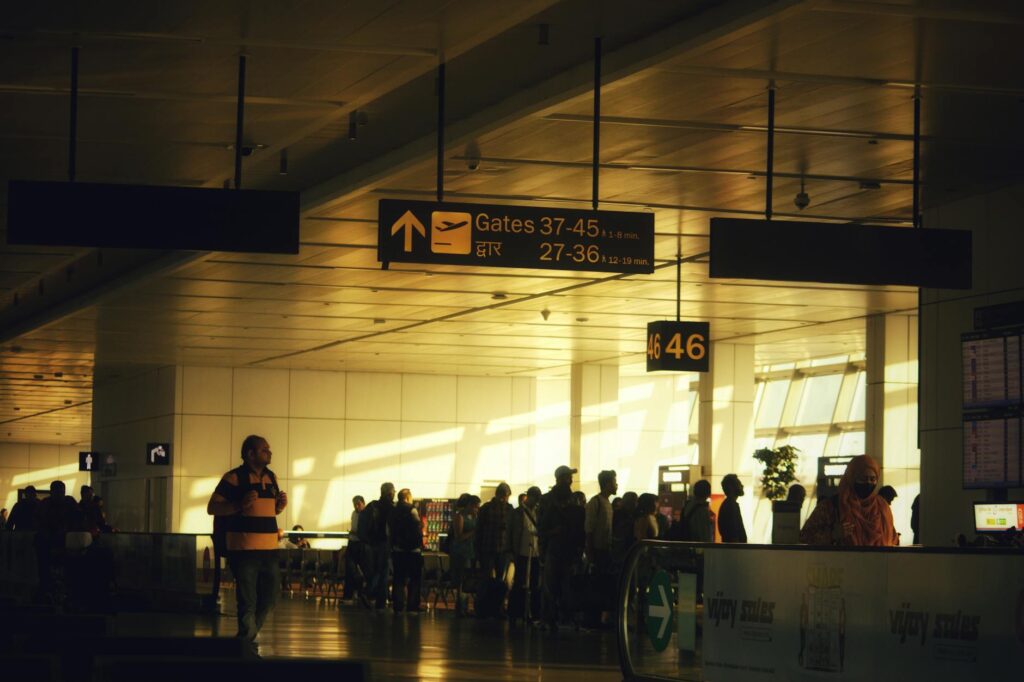

Delhi‑NCR commuters will soon enjoy a smoother transition between the newly inaugurated Namo Bharat high‑speed rail service and the extensive Delhi Metro network, thanks to a pioneering single‑point security check. Launched this week, the initiative places a unified screening zone at the junction of Namo Bharat and adjacent metro stations, eliminating the need for duplicate checks and cutting transfer times dramatically. Officials anticipate that the streamlined process will not only boost passenger convenience but also enhance overall security coordination across the region’s busiest transport corridors. This article examines the system’s design, its expected impact on daily commuters, operational hurdles, and the roadmap for future expansions.
Seamless interchange concept
The idea behind a single‑point security checkpoint is simple yet transformative: one screening, multiple modes. Previously, travelers exiting Namo Bharat had to undergo a separate security scan before entering the metro, and vice‑versa. By consolidating these procedures into a shared zone, authorities aim to reduce redundancy, lower crowding at entry points, and create a more intuitive flow for passengers juggling long‑distance and urban travel.
How the single‑point check works
Located at the Delhi Metro’s Ashok Park Main and Rajiv Chowk stations, the new facility houses X‑ray scanners, metal detectors, and a biometric verification desk operated jointly by Indian Railways and Delhi Metro Rail Corporation (DMRC). Commuters present a single ticket—either a Namo Bharat e‑ticket or a metro smart card—and undergo one comprehensive security sweep before proceeding to either platform. Signage in Hindi and English guides travelers through the process, while staff equipped with multilingual support ensure smooth navigation.
Impact on commuter experience
Early estimates suggest a reduction of up to 15 minutes per transfer during peak hours. The following table compares projected daily footfall and average transfer time before and after implementation, using the latest data as of 13 January 2026.
| Metric | Before (2025) | After (2026) |
|---|---|---|
| Average daily commuters (Namo Bharat ↔ Metro) | 1,45,000 | 1,58,000 |
| Average transfer time (minutes) | 22 | 7 |
| Security incidents reported | 12 | 5 |
Beyond speed, the unified checkpoint enhances perceived safety, as passengers no longer navigate multiple security zones that can become bottlenecks. Surveys conducted by the Centre for Urban Transport indicate a 68 % satisfaction rate among users who have already experienced the new system.
Operational challenges and future plans
Integrating two distinct security protocols presented logistical hurdles. Training staff to handle both rail and metro security standards required a joint curriculum, and synchronizing data feeds between Indian Railways’ Centralized Ticketing System and DMRC’s smart‑card platform demanded robust IT infrastructure. Nevertheless, pilot runs demonstrated that real‑time monitoring and AI‑driven threat detection can maintain high safety levels without sacrificing throughput.
Looking ahead, authorities plan to replicate the single‑point model at other interchanges, such as the upcoming Namo Bharat‑Gurgaon corridor and the Delhi‑Meerut high‑speed link. The long‑term vision is a citywide “seamless security network” that supports the broader goal of making Delhi‑NCR a world‑class multimodal hub.
Conclusion
The launch of a single‑point security check between Namo Bharat and Delhi Metro stations marks a pivotal step toward a more integrated, efficient, and secure transit ecosystem in the capital region. By cutting redundant screenings, reducing transfer times, and enhancing passenger confidence, the initiative not only addresses immediate commuter pain points but also sets a scalable template for future inter‑modal connections. As the system matures, its success could inspire similar innovations across India’s rapidly expanding transportation landscape.
Image by: Omkar Pendsay
https://www.pexels.com/@omkar-pendsay-432283713